

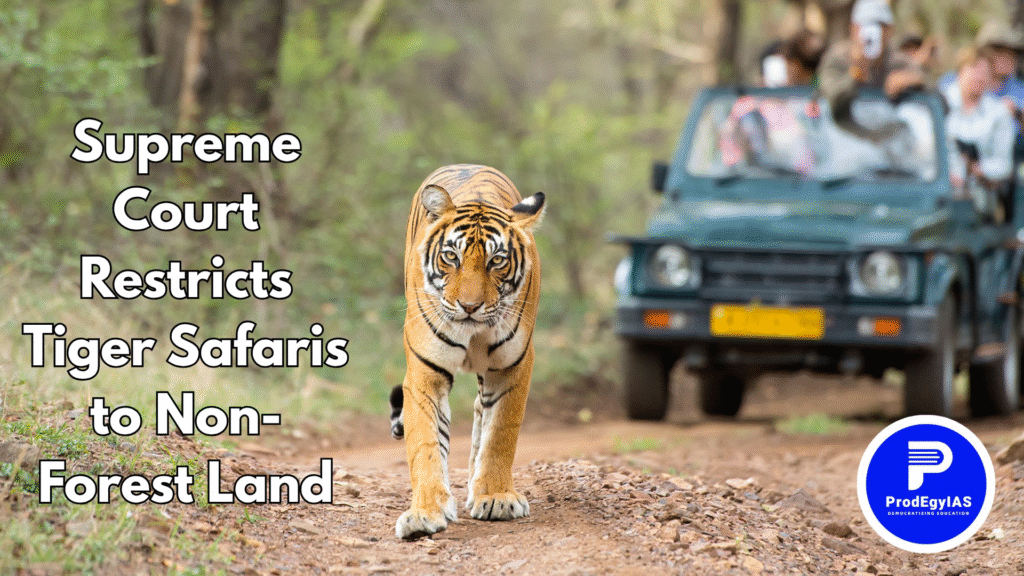
Following the discovery of grave violations in the Jim Corbett Tiger Reserve, the Supreme Court issued a significant conservation decision to safeguard India’s tiger sanctuaries. In a suo motu case, the Court examined a report from an expert group that emphasised how uncontrolled tourism, unlawful construction, and tree-cutting harm delicate ecosystems.
Key Directives
Tiger Safaris Only in Non-Forest Areas
In core and crucial tiger habitats, safaris are no longer permitted. They must be connected to an appropriate rescue and rehabilitation facility for injured or conflict tigers and may only be constructed on non-forest or degraded forest land inside buffer zones.
Ban on Night Tourism and Mobile Phones
In tiger reserves, nighttime travel is strictly forbidden. In order to minimise disruption, mobile phone usage is prohibited in important tourist destinations and roads that cross core zones must be closed from nightfall to dawn.
Strict Eco-Sensitive Zone (ESZ) Rules
Every state must make sure that the ESZ boundaries surrounding tiger reserves adhere to MoEF&CC regulations and notify them of this within a year.
Regulated Tourism Infrastructure
In buffer zones, only environmentally friendly, community-run facilities are permitted. To prevent habitat fragmentation, construction is prohibited in tiger corridors.
Ban on Harmful Commercial Activities
In buffer and periphery areas, mining, polluting industries, sawmills, hydropower projects, low-flying aircraft, introduction of exotic species, and waste discharge are all strictly forbidden.
Mandatory Action for States & NTCA
States have three months to amend their Tiger Conservation Plans and six months to notify core and buffer zones. Every year, NTCA is required to perform ecological audits and submit a compliance report to MoEF&CC.
UPSC General Studies Paper Preparation
| Topic | |
| UPSC Syllabus | UPSC Free Notes |
| UPSC Optional Subjects | Khushhali Solanki (AIR 61, UPSC CSE 2023) |
Public Administration Optional Exam Preparation
Topic | |
About the Author: Jyoti Verma