

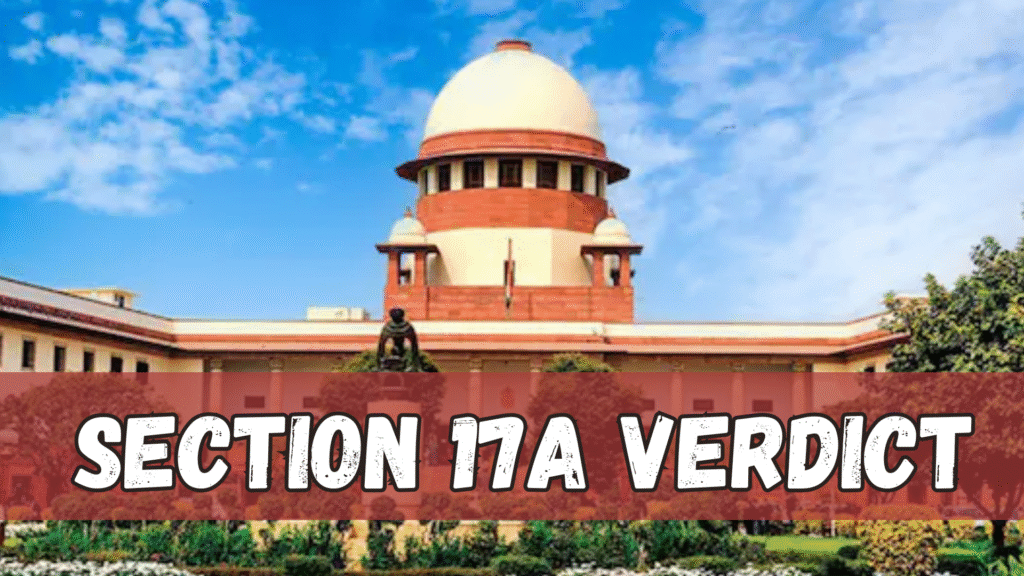
The law has a part called Section 17A of the Prevention of Corruption Act, 1988. This Section 17A Verdict was made to help public servants. It protects them from people who make complaints. These complaints are made to trouble the public servants. The law says that before anyone can investigate a servant they need to get permission first. This is for the decisions that the public servants make while doing their job.
The Supreme Court of India has recently said something about Section 17A. This has made people think about Section 17A again. It is a situation. We need to stop corruption. We also need to give public servants the freedom to do their job. Section 17A is important for this balance between stopping corruption and giving public servants autonomy. The Prevention of Corruption Act, 1988 and its Section 17A are very important for this.
Rationale Behind Section 17A
- The law was made because people in charge were becoming more afraid of taking risks and making mistakes. This happened when it seemed like everyone was getting too careful and did not want to do anything that might go wrong. The provision was created to deal with this problem of people being overly cautious.
- The police officers were worried that they would be in trouble with the law after they made decisions that were really about following the rules. The officers thought that even if they made decisions based on the policy they might still get in trouble later on. The officers feared that they would be looked at closely for the decisions they made even if those decisions were based on the rules and were made in faith.
- Things started to go wrong because people were waiting long to make decisions and they could not make up their minds. This was affecting the way the government was working and the results they were getting from governance outcomes. The delay and indecision were really affecting governance outcomes.
- Section 17A was made to make sure that the people who make policy decisions are not treated like criminals just because something bad happens as a result of these policy decisions. This is what Section 17A is, about it wants to protect the people who make policy decisions from being treated unfairly. Section 17A is important because it says that just because a policy decision does not work out well it does not mean that the people who made the decision should be punished.
Thus, the law aimed to protect administrative discretion while retaining accountability for mala fide actions.
Judicial Interpretation and Concerns
- The Supreme Court made it very clear that Section 17A of the law cannot be used to protect people who’re corrupt. The Supreme Court said this in its verdict. This means Section 17A cannot be a shield for corruption.
- When people make decisions as part of their job they need to get permission. This is what we mean by sanction. It is necessary for decisions that people make at work. Prior sanction is required for these kinds of decisions.
- Things, like taking bribes or using your job for gain are not completely protected. Acts of bribery and personal gain or abuse of position do not have protection.
- The people who investigate crimes should not be stopped from doing their job by a lot of rules and procedures. Investigative agencies like these should be able to do what they need to do. We need to make sure that investigative agencies can keep working and are not hindered by things, like paperwork and protocols. This way investigative agencies can get to the bottom of things.
- The Court said that laws against corruption must be understood in a way that they still scare people from doing things. The Court wants to make sure that these laws against corruption are strong and people think before doing something bad. The Court is talking about laws against corruption and how they should be used to stop people from being corrupt.
Tension Between Accountability and Protection
- The verdict shows us a problem with the way things are run. This problem is really important. It is about the core of governance. The verdict tells us that there is a dilemma, in governance.
- Much protection can make it harder to stop corruption. This is because excessive protection may weaken the enforcement of -corruption laws. When we have -corruption enforcement it is supposed to help us stop corruption.. If there is too much protection it can get in the way of anti-corruption enforcement.
- If people are too careful all the time it can stop things from getting done. The government or a company can become so slow to make decisions because they are afraid of making a mistake. This is what happens when there is vigilance it can really cause bureaucratic paralysis.
- Democratic governance needs people who’re willing to make tough decisions and also be accountable for the way they run things. This means that democratic governance requires decision-making and administration that is answerable to the people. The people in charge of governance have to be brave and make decisions without being afraid and they also have to be responsible for what they do. Democratic governance is about making sure that the people in charge are making good decisions and are answerable to the community.
- The main thing is that democratic governance requires decision-making and administration that is answerable so the people can trust the system and feel safe. Democratic governance is very important because it helps to keep the people in charge in check and it makes sure that they are working for the good of everyone not themselves.
- Democratic governance is a system that relies on decision-making and answerable administration to work properly. This is what makes democratic governance so important it is the key, to making sure that the people are treated fairly and that their rights are protected. Democratic governance requires decision-making and answerable administration to be effective.
- This tension is about the arguments in public administration. These arguments are about how much freedom public administration workers have to make their decisions how responsible they are for what they do and who is in charge of them. Public administration is a deal and people have different ideas about discretion, responsibility and control, in public administration.
Way Forward
- Clear guidelines for granting sanction under Section 17A.
- Time-bound approval mechanisms to prevent misuse.
- Strong internal vigilance and ethical leadership within services.
- Distinguishing policy errors from corrupt intent in investigations.
The Section 17A verdict reinforces that officer protection and corruption control are not mutually exclusive. A mature administrative system must protect honest officials while ensuring that public office is never a refuge for corruption. The judgment strengthens the constitutional vision of accountable yet empowered governance.
UPSC General Studies Paper Preparation
Public Administration Optional Exam Preparation
Topic | |
About the Author: Jyoti Verma