

Overview
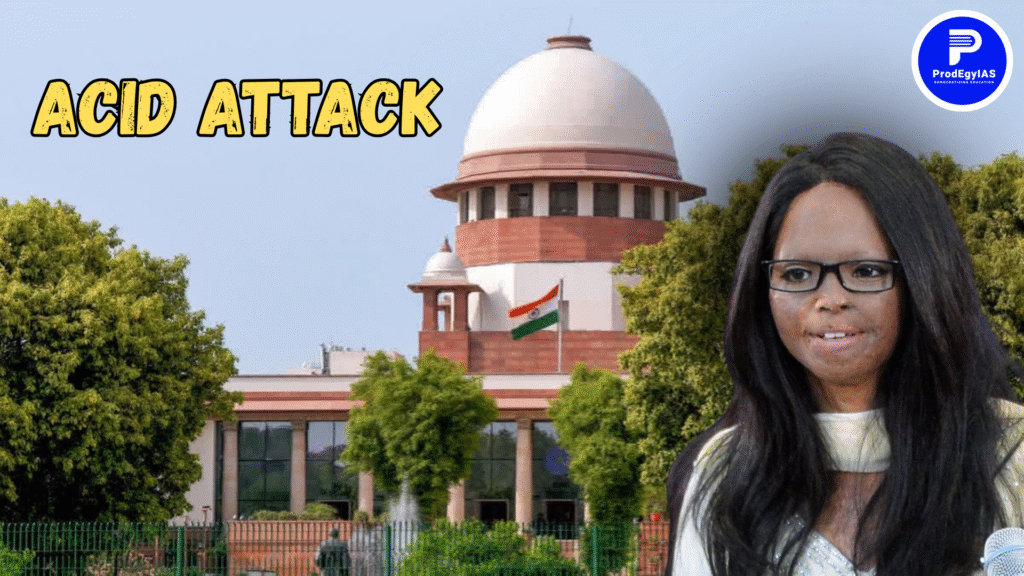
A broader institutional failing is highlighted by the judiciary’s intervention: survivors of one of the most heinous crimes still find it difficult to obtain prompt, respectful, and all-encompassing care. The Court has rekindled the urgent appeal for nations to give survivor-centric policies, infrastructure, and accountability top priority by pointing out serious shortcomings. In addition to being required by law, ensuring appropriate treatment and rehabilitation is a moral need that characterises the Indian justice system’s responsiveness and compassion.
Judicial Observations and Concerns
A handful of public and private hospitals lack specialised burn units, trained personnel, and protocols to handle acid burn emergencies, the Supreme Court noted. care delays for survivors are sometimes caused by bed shortages or medical staff ignorance of the Court’s previous required free care.
It is also concerning that the Victim Compensation Scheme is applied differently in each state. While some jurisdictions provide immediate temporary support, others delay payouts for months, depriving survivors of the money they need for vital reconstructive treatments. The lack of control processes to ensure that compensation is used for long-term care and reaches survivors in full was another point the judiciary highlighted.
Challenges in Treatment and Rehabilitation
Acid assaults cause severe physical and psychological trauma that requires long-term medical care, several surgeries, and continuous mental health treatment. However, the Court observed that survivors often struggle to get reconstructive surgical professionals or therapists. There are still not enough rehabilitation facilities, and survivors frequently experience social shame and discrimination at work.
The Court emphasised that the absence of integrated support systems linking police, hospitals, district legal services authorities, and welfare agencies exacerbates survivors’ grief and makes recovery far more challenging than it should be.
Directions and the Way Forward
The judiciary has called for a comprehensive review of the existing infrastructure. Information on burn units, rehabilitation programs, payment of compensation, and compliance with free treatment guidelines has been requested from the states. The Court suggested that more extensive public health measures, such as crisis-response procedures and mandatory training for emergency personnel, should include acid attack treatment.
Stricter enforcement of the law is also crucial. Despite laws prohibiting its sale, acid is still sold in numerous locations. The Court reiterated that district administrations must strictly conform to availability, sale records, and sanctions for violations.
UPSC General Studies Paper Preparation
| Topic | |
| UPSC Syllabus | UPSC Free Notes |
| UPSC Optional Subjects | Khushhali Solanki (AIR 61, UPSC CSE 2023) |
Public Administration Optional Exam Preparation
Topic | |
About the Author: Jyoti Verma