

Answer:
Answer: Model Answer approach
Introduction:
The phrase “Indo-Islamic” refers to the development of a composite culture that resulted from the medieval period’s encounter, blending, and integration of Islamic and Indian cultural traditions. The Indo-Islamic style was not exclusively Hindu or Islamic. The architecture was actually a fusion of Indian and Islamic architectural elements.
How to approach the answer:
Comprehending and organizing the response: Give a thorough explanation of the key features of Indo-Islamic architecture during the Sultanate era as well as the novel features added during the Mughal era.
Overview:
- Give a succinct overview of Indo-Islamic architecture, highlighting how it evolved during the Sultanate era.
- Describe how the Sultanate and Mughal eras contributed to the distinctiveness of Indo-Islamic architecture.
Body:
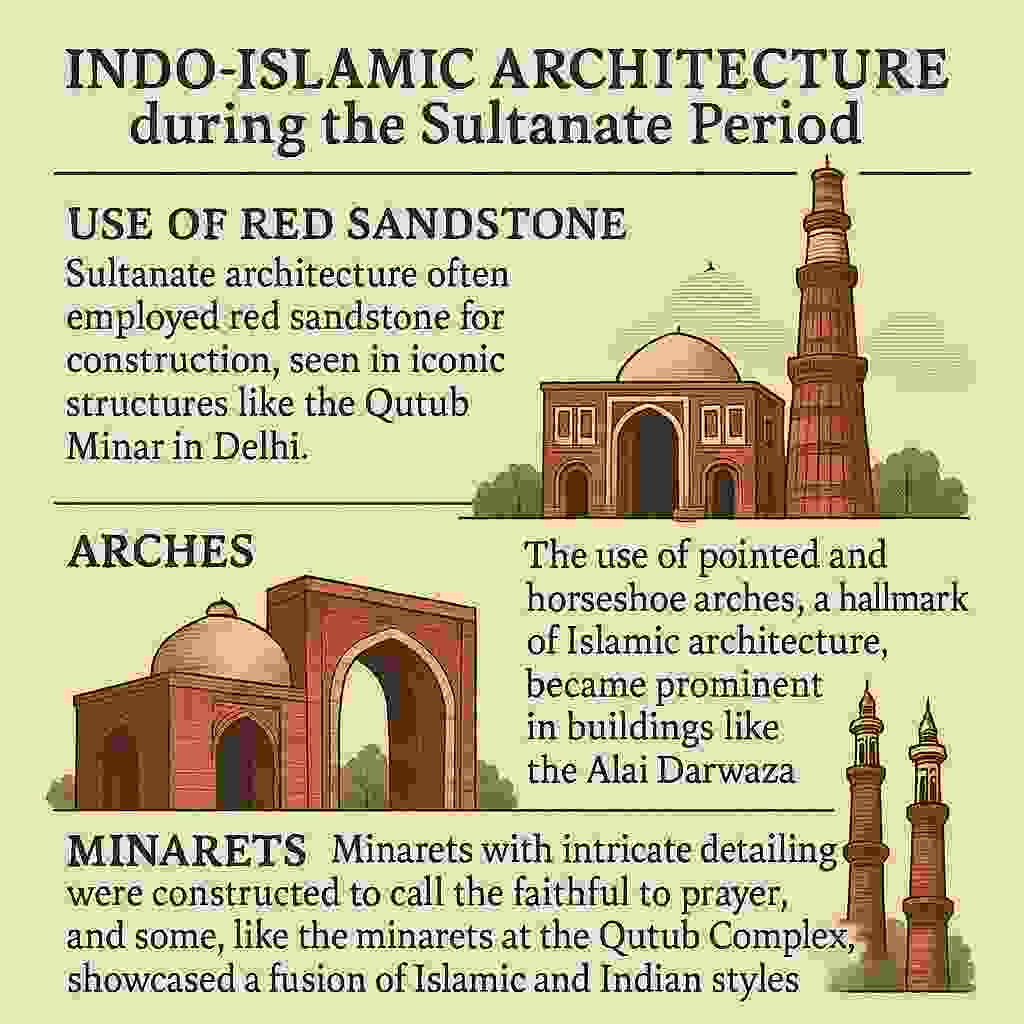
Sultanate Period Indo-Islamic Architecture and Under the Mughals, New Components Were Introduced.
In summary:
List the salient features of the Sultanate era’s Indo-Islamic architecture, which served as the model for the Mughals’ architectural advancements and highlight how Mughal architecture fused architectural and artistic excellence by incorporating aspects from other cultures to produce some of India’s most famous buildings.
Practice Question: Compare and contrast the architectural styles of the Sultanate and Mughal periods in India. Highlight the role of new techniques and materials introduced under the Mughals.
UPSC General Studies Paper Preparation
| Topic | |
| UPSC Syllabus | GS Genius-50 Program |
| Public administration crash course | UPSC GS Mains 2025 Study Material |
| About the Author: Nitin Kumar Singh |