

Overview
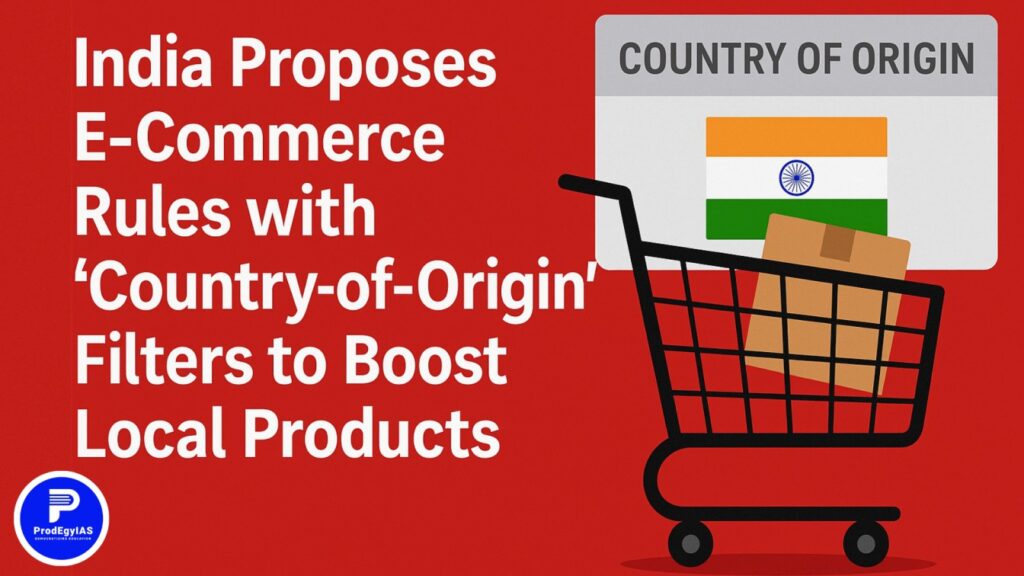
The Indian government proposed changes to the Legal Metrology (Packaged Commodities) Rules, 2011 that would require e-commerce platforms and online marketplaces to show a “country of origin” filter so that customers could find and choose domestically made goods. As part of the larger “Atmanirbhar Bharat Abhiyan” objective, the draft rule states that this action intends to promote Indian manufacturers and craftsmen, particularly in light of increased import tariffs and changing global trade dynamics.
Why it’s important
- The change gives Indian customers additional information about where products come from when they shop online, empowering them to make better decisions and promoting local value chains.
- It supports India’s initiatives to increase manufacturing competitiveness, lessen reliance on imports, and support domestic small and medium-sized businesses.
- This effort offers a strategic buffer and promotes export market diversity at a time when key trading partners’ levies on Indian goods have grown and global trade tensions are escalating.
- The amendment emphasizes how regulatory policy is being utilized to combine trade strategy, industrial policy, and consumer protection under one roof for those interested in public administration and GS.
Important Events & Highlights
- In order to highlight products made in India, the draft amendment directs e-commerce platforms to include a clear “country of origin” filter for products featured online.
- The regulation’s placement under the Legal Metrology Rules, which control product packaging and labeling, suggests that this regulatory tool is being adapted for use in digital marketplaces.
- In an effort to diversify markets in reaction to tariff rises elsewhere, the government has announced that a group of Indian exporters will visit Moscow for four days.
- The action is part of a larger plan to assist local small businesses and artisans who have faced difficulties as a result of tariff pressure and disruptions in international trade.
Obstacles and Strategic Aspects
- Given the volume and variety of listings and sellers, ensuring that e-commerce systems consistently and successfully apply the filter feature may be operationally challenging.
- Particularly for imported items or smaller sellers that depend on cross-border sourcing, the legislation may increase compliance costs or affect pricing structures, prompting trade-off concerns.
- There may be issues with the measure’s compatibility with domestic and international trade laws, as well as how trading partners or WTO regulations may interpret it.
- Without incentives, awareness campaigns, and quality control of domestic products, the filter might not be able to significantly alter consumer behavior on its own.
Important Events & Highlights
- In order to highlight products made in India, the draft amendment directs e-commerce platforms to include a clear “country of origin” filter for products featured online.
- The regulation’s placement under the Legal Metrology Rules, which control product packaging and labeling, suggests that this regulatory tool is being adapted for use in digital marketplaces.
- In an effort to diversify markets in reaction to tariff rises elsewhere, the government has announced that a group of Indian exporters will visit Moscow for four days.
- The action is part of a larger plan to assist local small businesses and artisans who have faced difficulties as a result of tariff pressure and disruptions in international trade.
Why it’s important
- The change gives Indian customers additional information about where products come from when they shop online, empowering them to make better decisions and promoting local value chains.
- It supports India’s initiatives to increase manufacturing competitiveness, lessen reliance on imports, and support domestic small and medium-sized businesses.
- This effort offers a strategic buffer and promotes export market diversity at a time when key trading partners’ levies on Indian goods have grown and global trade tensions are escalating.
- The amendment emphasizes how regulatory policy is being utilized to combine trade strategy, industrial policy, and consumer protection under one roof for those interested in public administration and GS.
Important Events & Highlights
- In order to highlight products made in India, the draft amendment directs e-commerce platforms to include a clear “country of origin” filter for products featured online.
- The regulation’s placement under the Legal Metrology Rules, which control product packaging and labeling, suggests that this regulatory tool is being adapted for use in digital marketplaces.
- In an effort to diversify markets in reaction to tariff rises elsewhere, the government has announced that a group of Indian exporters will visit Moscow for four days.
- The action is part of a larger plan to assist local small businesses and artisans who have faced difficulties as a result of tariff pressure and disruptions in international trade.
Obstacles and Strategic Aspects
- Given the volume and variety of listings and sellers, ensuring that e-commerce systems consistently and successfully apply the filter feature may be operationally challenging.
- Particularly for imported items or smaller sellers that depend on cross-border sourcing, the legislation may increase compliance costs or affect pricing structures, prompting trade-off concerns.
- There may be issues with the measure’s compatibility with domestic and international trade laws, as well as how trading partners or WTO regulations may interpret it.
- Without incentives, awareness campaigns, and quality control of domestic products, the filter might not be able to significantly alter consumer behavior on its own.
The Way Ahead
- To create implementation schedules, precise standards, and audit procedures for the “country of origin” filter, the government should collaborate with platforms, vendors, and trade associations.
- In order for visibility to transfer into actual buy preference, concurrent efforts should be undertaken to enhance the branding, quality, and cost-competitiveness of Indian-produced goods.
- Digital and offline consumer awareness efforts should emphasize the importance of origin labeling, support “made in India” products, and advocate making educated decisions.
- Frameworks for monitoring and evaluating the regulation’s effects on domestic production, import trends, and consumer behavior should be established, along with regular policy reviews.
- In order to lessen its susceptibility to trade interruptions and international tariffs, India should also keep expanding its export markets by utilizing more robust manufacturing and value chains.
UPSC General Studies Paper Preparation
| Topic | |
| UPSC Syllabus | UPSC Free Notes |
| UPSC Optional Subjects | Khushhali Solanki (AIR 61, UPSC CSE 2023) |
Public Administration Optional Exam Preparation
Topic | |
About the Author: Jyoti Verma