
13th Ministerial Conference (MC13) of the World Trade Organization (WTO)
Why in News: The 13th Ministerial Conference (MC13) of the World Trade Organization (WTO) concluded without any major breakthroughs, as most key issues remained unresolved. WTO reforms continue to be a major challenge. However, India’s Commerce and Industry Minister, Piyush Goyal, highlighted that India has successfully preserved its policy flexibility to safeguard the interests of its farmers.

Sector | India’s Demand 🇮🇳 | Outcome 📜 | Impact on India 🌍 |
🌾 Agriculture | Sought a ‘permanent solution’ for public stockholding. | No agreement reached; developed nations opposed, citing food security concerns. | No immediate threat due to the ‘peace clause’. |
🐟 Fisheries Subsidies | Advocated curbing harmful subsidies for distant water fishing. | No outcome document; ministerial declaration omitted fisheries subsidies. | Policy space retained, safeguarding artisanal fishermen operating within 200 NM. |
💻 E-Commerce | Opposed continued Customs duty exemption on electronic transmissions. | Moratorium extended until the next ministerial conference or March 31, 2026. | Reduced tax revenue and limited policy space for digital industrialization. |
⚖️ Dispute Settlement | Called for a fully functional dispute resolution mechanism. | Agreement to establish an accessible system for all members by the end of 2024. | Ensures quicker resolution of India-related trade disputes. |
Public Accounts Committee (PAC)
Why in News: The Public Accounts Committee of Parliament has recently instructed the government to reassess the current regulations governing toll taxation on National Highways.
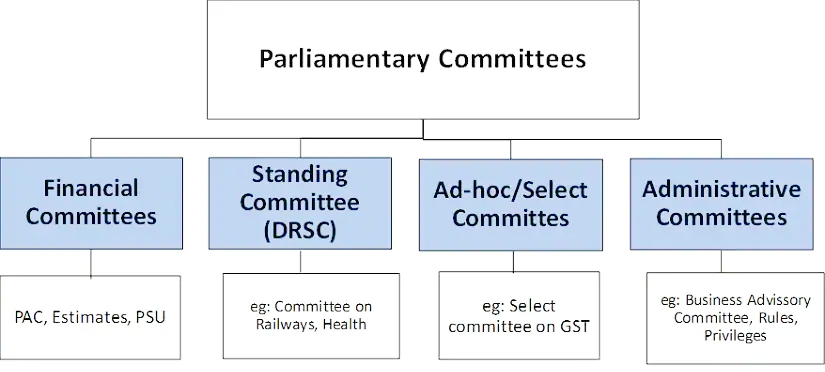
About PAC
- It is a parliamentary committee responsible for auditing the revenue and expenditure of the Indian government.
- Functions as a check on government spending, ensuring financial accountability.
- Examines the audit report of the Comptroller and Auditor General (C&AG) after its presentation in Parliament.
- The C&AG assists the committee during investigations.
- Ensures that funds granted by Parliament are spent within their intended scope.
Genesis of the Committee
- One of the oldest parliamentary committees, established in 1921.
- Initially, the Finance Member served as the Chairperson, and the Finance Department handled its secretarial work.
- After the Constitution came into force in 1950, it became a Parliamentary Committee under the Speaker’s control.
- The Lok Sabha Secretariat took over its secretarial functions.
Membership Structure
Comprises 22 members:
15 from Lok Sabha
Up to 7 from Rajya Sabha
- Elected annually through proportional representation with a single transferable vote.
- Term of office: One year.
- Chairperson is appointed by the Speaker from Lok Sabha members.
- Since 1967-68, the Chairperson has been from the Opposition.
- Ministers cannot be members, and if an elected member becomes a Minister, they vacate the position.
Functions of PAC
- Examines government expenditure accounts to ensure proper use of allocated funds.
- Reviews the annual finance accounts of the government.
- Scrutinizes appropriation accounts and C&AG reports to verify:
- Legality of fund usage.
- Adherence to financial regulations.
- Proper authorization of re-appropriations.
Sant Ravidas
Why in News: The 648th birth anniversary of Sant Ravidas was recently observed, emphasizing his teachings on social justice, equality, and the idea of Begumpura.
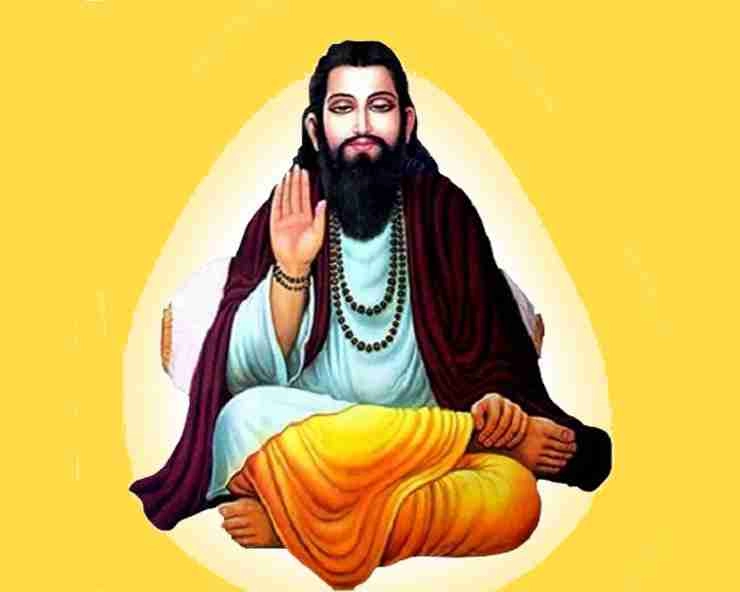
His Life and Background
- Mystic and Religious Leader: A key figure in the Nirgunabhakti tradition and founder of the Ravidassia religion (15th–16th century CE).
- Birth and Caste Identity: Born in 14th-century Varanasi into the Chamar caste (leather-working community).
- Challenge to Social Norms: Rejected caste discrimination, gender bias, and ritualistic practices, promoting devotion to a formless God (Nirankar).
- Influence on Sikhism: The Guru Granth Sahib includes 41 of his verses, compiled by Guru Arjan Dev.
- Concept of a Just Society: Advocated for Begumpura, an ideal land free from sorrow and social divisions.
- Mentor to Meera Bai: Served as a spiritual guide to Meera Bai, the Bhakti poet and queen of Chittoor.
Philosophy and Teachings
- Social Equality: “Jaati paati puchhe nahi koi, hari ko bhaje so hari ka hoi” (God does not ask for caste; anyone who worships Him belongs to Him).
- Purity of Mind Over Rituals: “Man changa toh kathoti mein Ganga” (A pure heart is as sacred as the Ganges).
- Ideal Society: “Begumpura shahar ka nao” (Begumpura is a city free from suffering and inequality).
Begumpura: His Vision of an Ideal Society
- An Egalitarian World: A society free from caste oppression, poverty, and injustice.
- Parallels with Socialism: Shares similarities with Karl Marx’s classless society, though Ravidas emphasized caste-based equality.
- Core Principles:
- No taxation, no monarchy, and no fear of rulers.
- Equal access to resources and opportunities for all.
- Community welfare prioritized over individual wealth.
Impact and Contemporary Relevance
- Influence on India’s Constitution: His teachings align with social justice, liberty, equality, and fraternity.
- Inspirational Figure for Reformers:
- B.R. Ambedkar: Incorporated Begumpura’s ideals into constitutional provisions.
- Kanshi Ram: Advocated for political and economic rights for marginalized groups.
- Government Recognition: His birth anniversary is a public holiday in Delhi, acknowledging his social impact.
- Continuing Relevance in Modern India:
- Fighting Caste Discrimination: His ideas remain crucial in eradicating social inequalities.
- Economic Empowerment: Advocates wealth redistribution and equal opportunities.
- Universal Human Values: Promotes compassion, social unity, and collective progress.
Supreme Court Debate on Lifetime Ban for Convicted Politicians
Context
- The Supreme Court is hearing petitions seeking a lifetime ban on convicted individuals from contesting elections.
- This has reignited the debate on decriminalizing politics and ensuring probity in public life.
Provisions Under the Representation of the People Act (RPA), 1951
- Section 8(3): Disqualifies individuals convicted and sentenced to two years or more of imprisonment; banned for six years post-release.
- Section 8(1): Disqualifies individuals convicted of heinous crimes (e.g., rape, corruption, UAPA offenses) regardless of sentence length; six-year post-release ban applies.
- Section 62(5): Prevents imprisoned individuals from voting, but undertrials can still contest elections.
- Section 11: Grants the Election Commission (EC) power to reduce disqualification periods, as seen in the case of Sikkim CM Prem Singh Tamang (2019).
Why Ban Convicted Individuals from Elections?
- Rising Criminalization of Politics: Reports indicate 46% of MPs elected in 2024 face criminal charges; 31% accused of serious crimes like murder and rape.
- Erosion of Public Trust: Allowing convicted individuals in politics undermines democratic institutions.
- Moral Turpitude Concerns: Heinous crimes and corruption convictions directly contradict public service ethics.
- Electoral Advantage of Criminals: Candidates with criminal backgrounds have a 15.4% winning probability, compared to 4.4% for clean candidates.
Challenges to Imposing a Lifetime Ban
- Potential for Misuse: Criminal charges could be weaponized against political rivals.
- Delayed Judicial Process: Slow trials allow candidates to contest multiple elections before conviction.
- Proportionality Issue: A lifetime ban may be too harsh for minor offenses.
- EC’s Discretion: Section 11 grants the EC power to reduce disqualification, raising concerns about bias and fairness.
Suggested Reforms and Way Forward
- Amend RPA Act: Disqualify candidates against whom charges are framed for crimes with five years or more punishment (Law Commission recommendations: 1999 & 2014).
- Fast-Track Courts: Expedite trials for MPs/MLAs (as per Supreme Court’s 2023 directive).
- Review EC’s Powers: Ensure transparency and accountability in disqualification decisions.
- Voter Awareness: Promote informed voting choices against candidates with criminal backgrounds.
- Political Consensus: Engage political parties to build consensus on criminalization reforms.
Conclusion
The criminalization of politics threatens democracy and weakens public trust. While a lifetime ban for heinous crimes is justified, a balanced approach is necessary to prevent misuse and ensure fairness. Stronger laws, faster trials, and voter awareness are crucial to achieving clean and accountable politics.