

Amchang Wildlife Sanctuary
Why in News: A severely decomposed elephant carcass was recently found in the Khanapara range of the Amchang Wildlife Sanctuary.
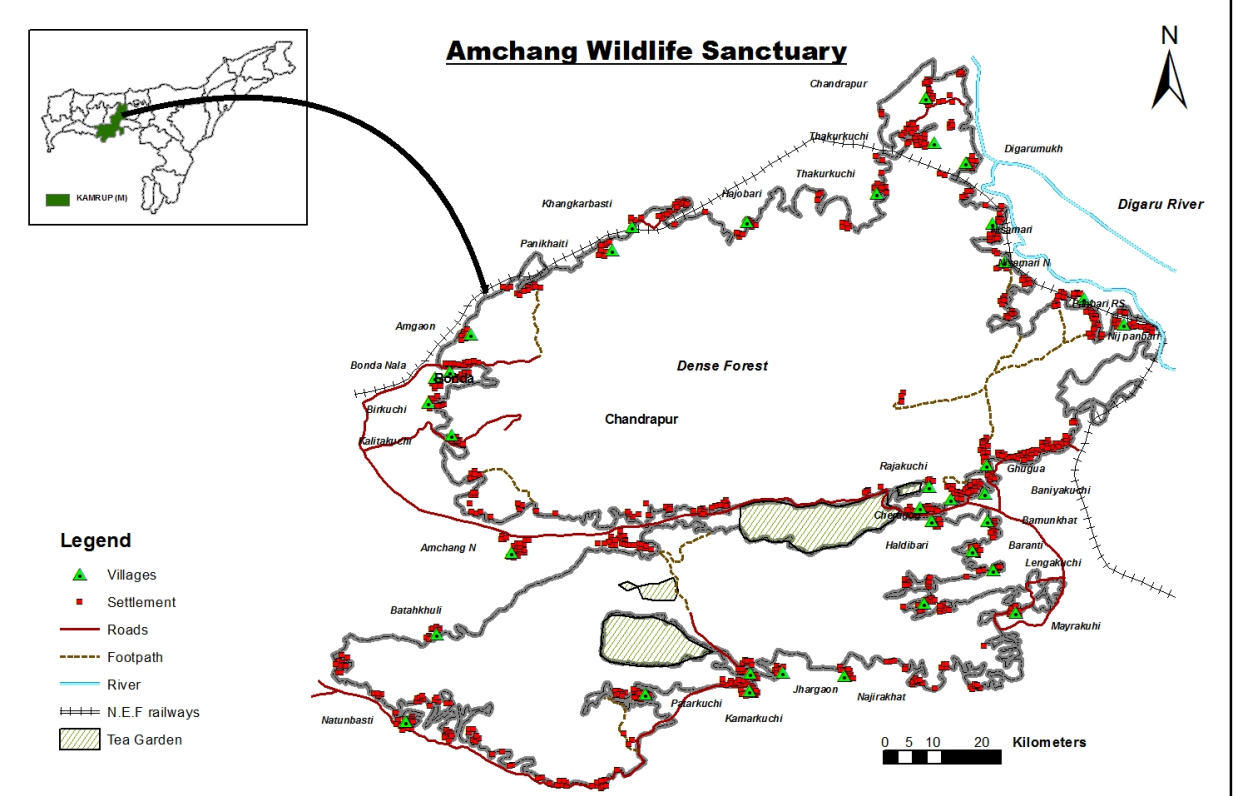
About Amchang Wildlife Sanctuary
- Location: Situated in the state of Assam.
- Constituent Forest Reserves: Comprises three reserve forests: Khanapara, Amchang, and South Amchang.
- Geographical Extent: Stretches from the Brahmaputra River in the north to the hilly forests of Meghalaya in the south, forming a continuous forest belt through Meghalaya’s Maradakdola Reserve Forests.
Flora
Features diverse forest types including:
- Khasi Hill Sal Forests
- East Himalayan Mixed Deciduous Forests
- Eastern Alluvial Secondary Semi-evergreen Forests
- East Himalayan Sal Forests
Fauna
Home to a variety of species such as:
- Mammals: Flying fox, Slow loris, Assamese macaque, Rhesus macaque, Hoolock gibbon, Porcupine.
- Birds: White-backed Vulture, Slender-billed Vulture.
- Butterflies: Tree yellow butterflies (gancana harina), native to Thailand, Malaysia, Singapore, and northeast India, are found here.
State of the Climate 2024 Report
Why in News: The State of the Climate 2024 Report has once again raised a Red Alert on the rapid acceleration of climate change within a single generation, driven by rising levels of greenhouse gases in the atmosphere.
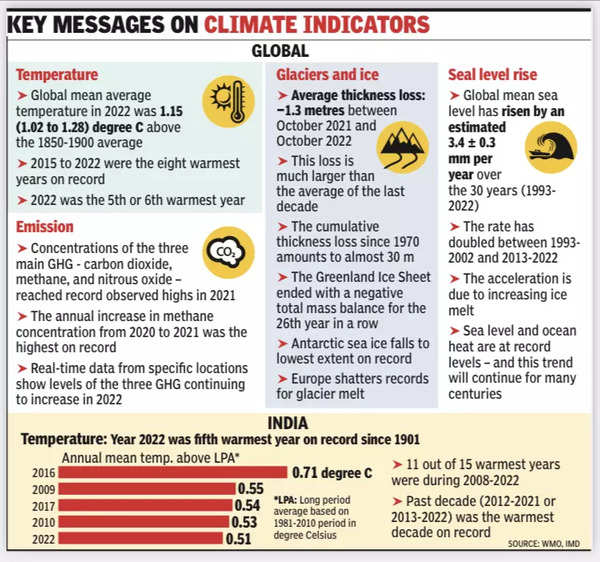
About Status of the Climate 2024 Report:
Released by the World Meteorological Organisation (WMO) at the United Nations Climate Conference (COP29) in Baku.
Highlights:
- Record-Breaking Warmth in 2024: 2024 is projected to be the warmest year on record, continuing a trend of abnormally high monthly global temperatures.
- Temperature Rise Above Pre-Industrial Levels: From January to September, global temperatures averaged 1.54°C above pre-industrial levels, with warming intensified by the El Niño phenomenon.
- Warmest Decade on Record: The decade from 2015-2024 is expected to be the warmest 10-year period ever, with a notable rise in ocean warming over the past two decades.
- Historic Greenhouse Gas Emissions: 2023 saw the highest recorded greenhouse gas emissions, and preliminary data indicate a continued rise in 2024.
- Carbon dioxide levels have surged by 51% since 1750.
- Oceans Absorbing Excess Heat: Oceans, absorbing around 90% of excess heat from global warming, reached record temperatures in 2023, with 2024 showing a continued increase.
- Accelerating Glacier Loss: In 2023, glaciers experienced the fastest ice loss on record, losing ice volumes equivalent to five times the water in the Dead Sea, mainly due to extreme melting in North America and Europe.
- Rising Sea Levels: The global mean sea level rose at a rate of 4.77 mm per year from 2014-2023, which is over double the rise rate from 1993-2002, driven by accelerated glacial melt.
Walking Pneumonia
Why in News: In recent weeks, doctors have observed cases of “walking pneumonia,” a mild but lingering lung infection with symptoms similar to those of a common cold.
:max_bytes(150000):strip_icc()/VWH_Illustration_How-to-Prevent-Walking-Pneumonia_Ellen-Lindner_Final-527006cce6fb40849ff4c9e2865c8410.jpg)
About Walking Pneumonia
- Type and Cause: Walking pneumonia is a form of atypical pneumonia, often caused by Mycoplasma pneumoniae, though other bacteria or viruses may also be responsible.
- Symptoms: Symptoms resemble those of a mild respiratory infection or common cold, including cough, sore throat, low-grade fever, and fatigue.
- Duration and Severity: Although generally not severe, it can be disruptive, with symptoms potentially lasting for several weeks if untreated.
- Comparison to Typical Pneumonia: Unlike typical pneumonia, which can lead to serious lung inflammation and breathing difficulties, walking pneumonia is often milder, allowing individuals to continue daily routines—hence its name from the 1930s.
- Also Known As ‘Silent’ Pneumonia: Sometimes referred to as “silent pneumonia” because individuals may show no symptoms, though X-rays reveal fluid-filled air sacs in the lungs.
- Transmission: Highly contagious, it spreads through airborne droplets from close contact like coughing, sneezing, or talking.
- Treatment: Usually treatable with rest, plenty of fluids, and sometimes antibiotics if needed.
World Diabetes Day 2024
Why in News: World Diabetes Day was recently commemorated to promote awareness about diabetes, focusing on its prevention and effective management.

About World Diabetes Day
- Date of Celebration: Observed globally every year on November 14.
- Significance of the Date: Marks the birth anniversary of Sir Frederick Banting, who, along with Charles Best, co-discovered insulin in 1922, revolutionizing diabetes treatment.
- Theme for 2024: ‘Access to Diabetes Care: Empowering Better Health for All.’
History
- Establishment: Initiated in 1991 by the International Diabetes Federation (IDF) and the World Health Organization (WHO) to address the rising diabetes epidemic.
- UN Recognition: Officially acknowledged as a global observance by the United Nations in 2006.
- Purpose: Highlights challenges associated with diabetes, emphasizes the importance of accessible healthcare, and advocates lifestyle changes to reduce risks.
Observance and Activities
- Events: Includes awareness campaigns, educational seminars, health check-ups, and fundraising initiatives.
- Blue Circle Symbol: Monuments worldwide are illuminated in blue, symbolizing unity in combating diabetes, and people are encouraged to wear blue to show their support.
Guru Ghasidas-Tamor Pingla Tiger Reserve
Why in News: The Union Minister for Environment, Forest and Climate Change announced the designation of Chhattisgarh’s Guru Ghasidas-Tamor Pingla Tiger Reserve as India’s 56th Tiger Reserve.
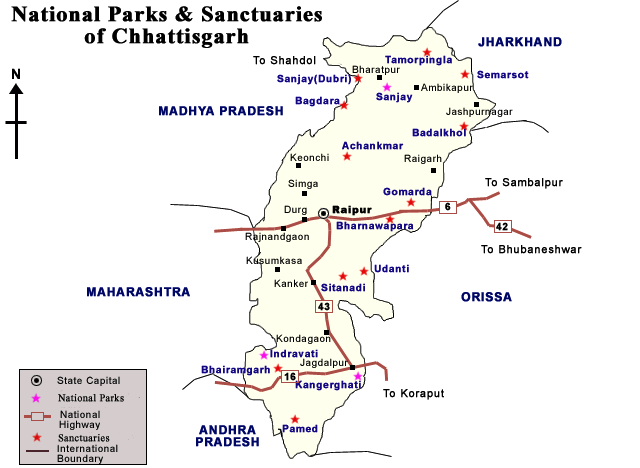
About Guru Ghasidas-Tamor Pingla Tiger Reserve:
- Location: Situated in the northern part of Chhattisgarh, bordering Madhya Pradesh and Jharkhand.
- Rank among Tiger Reserves: It is the third-largest tiger reserve in India, following Nagarjunasagar-Srisailam Tiger Reserve (Andhra Pradesh) and Manas Tiger Reserve (Assam).
- Connectivity with Other Reserves: Connected to Bandhavgarh Tiger Reserve in Madhya Pradesh (West) and Palamau Tiger Reserve in Jharkhand (East).
- Contiguous with Sanjay Dubri Tiger Reserve in Madhya Pradesh.
- Geography: Located within the Chota Nagpur plateau and partially in the Baghelkhand plateau.
- Rivers and Water Sources: Source of major rivers like Hasdeo Gopad and Baranga.
- Serves as a catchment for rivers such as Neur, Bijadhur, Banas, Rehand, and several smaller streams.
- Terrain and Habitat: Features diverse terrains, dense forests, streams, and rivers that support rich faunal diversity and provide crucial habitats for tigers.
- Fauna Diversity: Home to 753 species, including 365 invertebrates and 388 vertebrates, as documented by the Zoological Survey of India.
- Other Tiger Reserves in Chhattisgarh: Udanti-Sitanadi, Achanakmar, and Indravati Tiger Reserves.