

Genetically Modified Mosquitoes |
Why in News: Brazil Releases Genetically Modified Mosquitoes to Combat Dengue Cases.

About Genetically Modified Mosquitoes
GM mosquitoes are bred in laboratories with specific genetic modifications.
Genetic Modifications:
- Self-Limiting Gene:Engineered to hinder the survival of female mosquito offspring into adulthood.
Female mosquitoes can transmit deadly diseases such as Malaria, Dengue, Zika, and Yellow fever, affecting millions of people every year |
- Fluorescent Marker Gene:Incorporated for easy identification of GM mosquitoes using special red light.
Life Cycle of GM Mosquitoes:
- Egg Production: GM mosquitoes produced in labs lay eggs containing the engineered genes.
- Release and Mating:Eggs carrying the self-limiting gene are released into target areas where they hatch and mature. These mosquitoes then mate with wild females, passing on the modified genes.
Mechanism of Action:
- Male Mosquito Protein:Male GM mosquitoes carry the tTAV-OX5034 protein, which disrupts the survival of female offspring.
- Reduced Population:Female offspring perish before reaching adulthood, resulting in a decline in the population of Aedes aegypti mosquitoes in the treated area.
Barda Wildlife Sanctuary |
Why in News: Barda Wildlife Sanctuary is currently under consideration as a potential site for the reintroduction of the Asiatic lion.
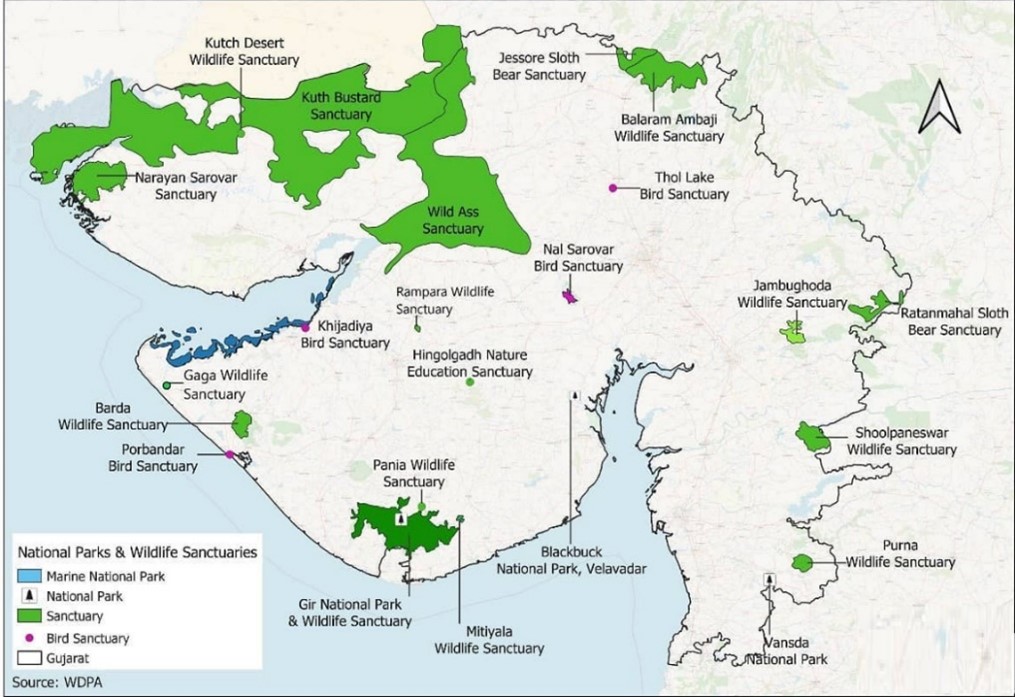
About Barda Wildlife Sanctuary:
- Proximity to Porbandar Coast:Situated approximately 15 km away from the Porbandar coast in Gujarat, the wildlife sanctuary occupies a strategic location.
- Ethnic Diversity:Inhabitants of this region of Saurashtra include various ethnic groups like Maldharis, Bharvads, Rabaris, and Gadhvis.
- Rich Floral Variety:The sanctuary boasts abundant floral diversity, featuring species such as Gorad, Dhav, Rayan, Amli, Dhudhlo, among others.
- Suitable Habitat for Prey Species: The habitat within the sanctuary is conducive for wild ungulates like Sambar, chital, and chinkara, providing an ample prey base for large carnivores such as lions.
Ernakulum National Park |
Why in News: Eravikulam National Park in Kerala unveils its inaugural fernarium, marking the state’s first.
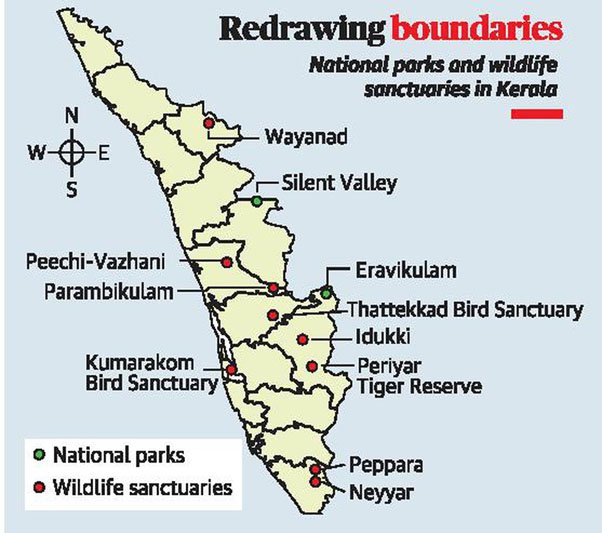
About Eravikulam National Park:
- Geographical Location: Situated in the High Ranges, specifically the Kannan Devan Hills, within the Idukki District of Kerala, the park is nestled amidst the Southern Western Ghats.
- Terrain Characteristics:The park’s landscape comprises expansive high-rolling plateaus, defining its topographical features.
- Diverse Plant Life: Varied plant communities, including grasslands, shrubs, and shola forests, adorn the park. Notably, it is renowned for hosting the rare Neelakurinji flowers, which bloom only once every 12 years.
- Rich Wildlife: Eravikulam National Park harbors a diverse range of fauna, including significant populations of endangered species such as Civet cats, Nilgiri Tahr, and Jungle cats.
Hasdeo Aranya |
Why in News: In recent times, the Hasdeo forest has become a focal point for tribal protests subsequent to the approval of Parsa coal mining operations.

About Hasdeo forest:
- Rich Biodiversity:Situated in the northern region of Chhattisgarh, the Hasdeo forest is renowned for its diverse flora and significant coal deposits.
- Indigenous Inhabitants:The forest is inhabited by the Gond tribe along with other indigenous communities.
- River and Wildlife: The Hasdeo River, a tributary of the Mahanadi, meanders through the forest, while the area serves as a crucial migratory route for elephants.
- Vegetation:Dominated by Sal and Teak trees, the flora of the region contributes to its ecological richness.
- Protected Areas: The forest is connected to adjacent protected areas such as the Bhoramdev Wildlife Sanctuary, Achanakmar Tiger Reserve, and Kanha Tiger Reserve.
- Coal Mining Presence:The Hasdeo reserve is host to 18 identified coal mines, highlighting its significance in mineral resource extraction.
- Legal Status:Being listed in the Vth Schedule of the Constitution, the acquisition of land in the area necessitates consultation and recommendations from the Gram Sabha, ensuring community involvement in decision-making processes.
Barnawapara Wildlife Sanctuary |
Why in News: The Chhattisgarh Forest Department recently accomplished the relocation of four sub-adult wild buffaloes from Assam to the Barnawapara Wildlife Sanctuary in Chhattisgarh.
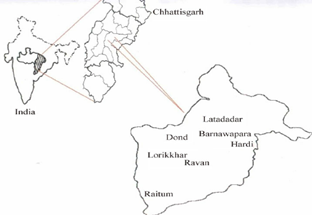
About Barnawapara Wildlife Sanctuary:
- Crucial Rivers:The sanctuary is nourished by the vital rivers Balmedhi, Jonk, and Mahanadi, serving as lifelines for its ecosystem.
- Vegetation Diversity:The flora within the sanctuary includes species such as Teak, Sal, and others, contributing to its rich biodiversity.
- Diverse Wildlife:The sanctuary is home to a variety of fauna, including Cheetal, Wild Boar, Sloth Bear, and other species.