

Exchange-Traded Funds (ETFs)
Relevance: GS 3- Indian Economy

Why in News: Investors are investing in exchange-traded funds (ETFs) focused on India in anticipation of the country’s general election outcomes.
About Exchange-Traded Funds (ETFs)
An exchange-traded fund (ETF) is a collection of marketable securities that reflect an underlying index, offering a blend of the features of mutual funds and stocks.
Features of Exchange-Traded Funds
Feature | Description |
Exchange-Traded | Traded on stock exchanges like individual stocks, allowing for intra-day trading and limit orders. |
Diversification | Offers instant diversification by providing exposure to a basket of underlying securities. |
Tracking Indices | Designed to track specific indices, sectors, commodities, etc., providing broad market exposure. |
Transparency | Holdings disclosed daily, providing investors with transparency regarding the underlying assets. |
Flexibility | Offers flexibility in terms of investment strategies, asset classes, and sectors, allowing investors to tailor their portfolios. |
Lower Expense Ratios | Typically have lower expense ratios compared to actively managed funds, making them cost-effective. |
Trading Efficiency | Potential for intra-day trading and limit orders, allowing for more efficient trading. |
Tax Efficiency | Typically more tax-efficient due to in-kind creations, but subject to potential capital gains tax due to fund redemptions. |
Minimum Investment | Varies, but often lower minimum investment requirements compared to mutual funds. |
Types of ETFs
- Equity ETFs: These track equity indices, offering exposure to stocks.
- Debt ETFs: These invest in government and corporate bonds.
- Commodity ETFs: These invest in commodities such as gold and silver.
- Sectoral/Thematic ETFs: These focus on specific industries or themes.
- International ETFs: These track foreign indices, providing exposure to global markets.
Exchange-Traded Funds vs Mutual Fund
Feature | ETFs | Mutual Funds |
Trading | Trade on stock exchanges like stocks, allowing for intra-day trading and limit orders | Traded only once per day at the end of the trading day at the Net Asset Value (NAV) |
Management Style | Passively managed, tracking an underlying index or asset | Actively managed by professionals aiming to outperform the market |
Expense Ratios | Generally lower expense ratios | Higher management fees |
Trading Frequency | Can be traded throughout the day | Only traded once per day |
Transparency | Daily disclosure of holdings | Periodic snapshots of holdings |
Tax Efficiency | In-kind redemptions limit capital gains taxes | Capital gains distributions can result in higher tax implications |
Minimum Investment | No minimum investment requirement | Typically higher minimum investment requirements |
Liquidity | Higher liquidity due to continuous trading | Lower liquidity due to trading only once per day |
Structure | Structured as tradable securities | Structured as pooled funds |
Creation and Redemption | Creation and redemption processes involve authorized participants (APs) | No specific creation and redemption process |
Index Tracking | Tracks specific indices or sectors | Tracks specific indices or sectors, but actively managed |
Glyptothorax Punyabratai
Relevance: GS III- Environment
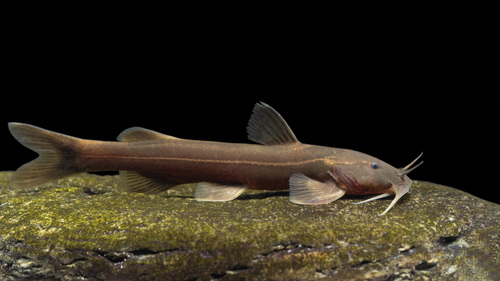
Why in News: The ICAR-NBFGR has recently identified a previously unknown species of catfish in the pure waters of Arunachal Pradesh, India. This newfound species has been designated Glyptothorax punyabratai.
About Glyptothorax punyabratai:
- Found in Tung Stream, a tributary of the Tissa River, within the Brahmaputra River drainage system.
- Named Glyptothorax punyabratai.
- Named in honor of Dr. Punyabarata Das, founder director of ICAR-NBFGR, for his significant contributions to fisheries research.
- The holotype and paratype specimens are currently housed at the National Fish Museum-cum-Repository of ICAR-NBFGR in Lucknow.
Term | Definition |
Holotype | This specimen, known as the name-bearing specimen, is typically the one initially discovered and described with this name. |
Paratype | Extra specimens included in the description alongside the original discovery are referred to as holotypes and paratypes, which serve as the main types for all species. |
About Catfish
- Diversity: Catfish comprise over 2000 species, making them one of the largest groups of freshwater fishes.
- Habitats: While primarily inhabiting freshwater environments, some catfish species are also found in marine waters.
- Behavior: Most catfish are nocturnal, meaning they are most active during the night.
- Ecological Niche: Catfish are typically bottom-dwellers, occupying the benthic zone of aquatic ecosystems.
- Features:
- Body Structure: Catfish generally have a cylindrical body shape with a flattened underside, aiding in their bottom-feeding habits.
- Barbels: Named for their distinctive whisker-like barbels around the mouth, resembling those of a cat.
- Spines: Many catfish species possess prominent spines in their dorsal and pectoral fins.
- Scaleless Nature: Catfish are characterized by their lack of scales, a distinguishing feature setting them apart from other fish species.
Doxxing
Relevance: GS III: Cyber Security

Why in News: Recent, there has been a surge in doxxing occurrences online worldwide.
About Doxxing
Doxxing, or doxing, refers to the act of publicly sharing an individual’s private information online without their consent.
- This includes sensitive data like home addresses, phone numbers, email IDs, medical records, government documents, and more, often obtained through illegal means such as hacking or theft.
- Impact and Intent:
- Doxxing can lead to severe consequences for the victim, both digitally and emotionally.
- Perpetrators may have malicious intent, aiming to harass, intimidate, or incite others to harm the victim.
- Even sharing semi-public content without consent can result in doxxing and subsequent harassment.
- Consequences:
- Victims may face a multitude of challenges, including fleeing their physical location, securing leaked finances, dealing with stalkers, and enduring violent threats.
- Doxxing not only affects the victim directly but also puts their family, friends, and colleagues at risk.
Anti-tank Guided Missile Weapon System
Relevance: GS III: Sci & Tech

Why in News: DRDO & Indian Army conduct successful trials of indigenous Man Portable Anti-tank Guided Missile Weapon System.
About ATGMs
Anti-tank guided missiles (ATGMs) are specialized munitions designed to target and destroy heavily armored military vehicles.
Size Variants:
- Small ATGMs are portable by a single individual and can be shoulder-launched.
- Medium-sized ATGMs require a team for transportation and firing.
- Large ATGMs are mountable on aircraft or main battle tanks, enabling long-range launches.
Technology Advancements:
- Historically, ATGMs necessitated close proximity to the target due to limited penetration power.
- Modern ATGMs utilize advanced technology to inflict damage from significant distances, affecting light and medium armored vehicles.
Warhead Types:
- Various warhead types are utilized based on target size and armor thickness.
- Notably, the High Explosive Anti Tank (HEAT) warhead features a penetrating metal spike effective against armored vehicles.
Guidance Systems:
- First-generation ATGMs required manual guidance, with operators steering the missile to the target.
- Second-generation ATGMs employed semi-automatic guidance, requiring operators to maintain target sight until impact.
- Third-generation ATGMs incorporate sophisticated guidance systems like electro-optical imagers (IIR), lasers, or W-band radar seekers, enabling “fire-and-forget” capabilities.
Anti-Tank Missiles in India
Missile Name | Description |
DRDO ATM | Developed by DRDO, it’s a first-generation wire-guided ATGM with a range of 1.6 km and a 106 mm HEAT warhead. |
AMOGHA | Bharat Dynamics’ guided ATGM under development with a range of 2.8 km. It comes in land and infrared versions, utilizing “thermal intelligent vision” for target acquisition. |
NAG | Third-generation Indian ATGM with a range of 500 m to 20 km. Features fire-and-forget capability and five variants including land, helicopter-launched, man-portable, and air-launched. |
HELINA/Dhruvastra | Designed for ALH, this ATGM has a 7 km range and can defeat conventional and explosive reactive armor. |
SANT | Smart Stand-off Anti-Tank Missile for Mi-35 Helicopter, developed for Air Force anti-tank operations. |
MPATGM | Man-Portable Anti-Tank Guided Missile with a 2.5 km range, offering fire-and-forget and top attack capabilities for infantry use. |
ATGM for MBT Arjun | Laser-guided munition launched from Arjun tank’s 120mm rifled gun, intended to defeat Explosive Reactive Armour-protected targets. |
Debrigarh Wildlife Sanctuary
Relevance: GS III – Conservation

Why in News: The Odisha government is set to reintroduce tigers in Debrigarh Wildlife Sanctuary and supplement the population in Similipal Tiger Reserve within the next four months to revive the endangered big cat population.
About Debrigarh Wildlife Sanctuary
- Geographic Location: Situated in the Bargarh district of Odisha, near Sambalpur city and adjacent to the Hirakud Dam, lies the Debrigarh Wildlife Sanctuary.
- Total Area: Covering a vast expanse of 346.91 square kilometers, the sanctuary provides ample space for the conservation of wildlife and their natural habitats.
- Flora and Fauna Diversity: The sanctuary hosts a rich diversity of flora and fauna, including more than 40 mammal species, 200 bird species, 40 reptile species, 12 amphibian species, 42 fish species, 39 odonate species, 85 butterfly species, and 38 spider species.
- Aquatic Biodiversity: Notably, the sanctuary stands out for its support of both terrestrial and aquatic biodiversity. The presence of the Hirakud reservoir adds to its allure, attracting numerous migratory waterfowl during the winter months.
Medicinal Flora: Within its bounds thrive over 250 plant species, many of which possess significant ethnobotanical and medicinal properties, contributing to the sanctuary’s ecological and medicinal value.