

Functioning of President’s Rule
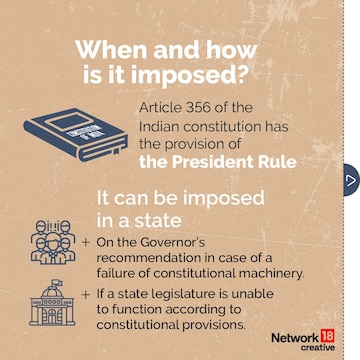
President’s rule, also known as a “State emergency” or “Constitutional emergency,” is imposed when the government of a state in India is unable to function according to the provisions of the Constitution. Under Article 356 of the Indian Constitution, the President has the power to declare this rule when the constitutional machinery in a state fails, such as due to political instability, law-and-order problems, or internal disturbances like sectarian violence.
Why Was President’s Rule Imposed in Manipur?
In February 2025, after Chief Minister N. Biren Singh resigned and no consensus was reached on a successor, the situation in Manipur became unstable. The state was also grappling with intense violence between the Meitei and Kuki-Zo communities, resulting in over 250 deaths and 60,000 displacements. The President of India imposed President’s rule, fulfilling the Union government’s responsibility under Article 355 to ensure that state governments function in accordance with the Constitution.
Types of Emergencies in the Indian Constitution
The Indian Constitution provides for three types of emergencies:
- National Emergency (Article 352) – Imposed when India’s security is threatened by war, external aggression, or armed rebellion.
- State Emergency (President’s Rule) (Article 356) – Imposed when the state government fails to function according to the Constitution.
- Financial Emergency (Article 360) – Imposed when the financial stability of India or any part of it is threatened.
National Emergency vs. President’s Rule
- National Emergency is invoked during threats to national security, and it applies to the entire country. It can be declared indefinitely with parliamentary approval.
- President’s Rule applies only to a state and is triggered when the state government fails to perform constitutionally. Unlike a national emergency, President’s rule cannot last more than three years without special conditions being met.
Misuse of President’s Rule
Historically, the power of President’s rule has been misused, particularly for political gains. It has been invoked many times across various states, sometimes during political crises. The S.R. Bommai vs. Union of India (1994) judgment placed limits on its misuse, emphasizing that it should be invoked only in cases of genuine constitutional breakdown and not for political reasons. The Supreme Court also established that any invocation of President’s rule is subject to judicial review to ensure it is not arbitrary or motivated by irrelevant grounds.
Conclusion
President’s rule plays a crucial role in maintaining the constitutional framework in cases of failure of governance at the state level. However, its misuse for political purposes has been a point of contention. The S.R. Bommai judgment serves as a safeguard against its misuse, ensuring that its imposition remains within constitutional boundaries and is subjected to judicial scrutiny.
The Panchayati Raj Movement in Distress: Reassessing Local Governance in India
Context: The 73rd Constitutional Amendment of 1992 marked a significant milestone in decentralizing governance in India by establishing the panchayati raj system. Despite its potential, the movement towards robust local governance has been hindered by several challenges. The shift in societal and technological landscapes threatens the relevance of panchayats, demanding a reevaluation of their role in India’s governance framework.

Challenges Facing the Panchayati Raj Movement
- Decline in Public Participation:
- Over time, public involvement in panchayat activities has dwindled, which, coupled with politicization, has undermined the system’s efficacy.
- Overdependence on Centrally Sponsored Schemes:
- The reliance on central schemes for funding and implementation has diminished the autonomy and decision-making power of local panchayats.
- Stagnation of Administrative Decentralization:
- Although reforms were initiated to devolve power to local governments, progress has plateaued. Less than 20% of states have fully devolved all 29 subjects mentioned in the Constitution’s Eleventh Schedule, hampering the spirit of decentralization.
- Fiscal Constraints:
- The reduction in untied grants and the growing fiscal dependence on the central government has further diminished the financial autonomy of panchayats, limiting their ability to make independent decisions.
- Reimagination of the Welfare State:
- The rise of cash transfer schemes like PM-KISAN, which bypass panchayats in favor of direct transfers, has reduced local governance’s role in welfare delivery.
- Impact of Urbanization:
- Rapid urbanization has shifted the policy focus from rural areas to urban centers, sidelining rural governance structures in favor of urban reforms.
Reimagining Panchayati Raj: Ways to Revive the System
- Empowering Local Governance with Technology:
- The use of technology could deepen citizen engagement in local planning and accountability processes. A networked panchayati raj system could bridge the rural-urban divide and promote inclusive development.
- Fostering Local Sustainability:
- Panchayats should take on greater roles in water conservation, renewable energy generation, and the management of common property resources, leveraging a combination of scientific practices, traditional knowledge, and public finances.
- Disaster Risk Management and Resilience Building:
- Panchayats can enhance disaster preparedness and community-based risk management, utilizing early warning systems and building resilient infrastructure to protect rural populations.
- Reviving the Role of Panchayats in Rural Development:
- A new vision for panchayati raj is needed to reinvigorate local governance, ensuring that rural India, home to a significant portion of the population, remains a priority in national policy-making.
Conclusion: To revitalize the panchayati raj system, we must move beyond seeing panchayats merely as conduits for government schemes. By empowering them with fiscal autonomy, administrative control, and a clearer role in sustainable development, we can ensure that panchayats remain central to governance in rural India. Adopting a new, technology-driven approach could reestablish the relevance of panchayats, fostering rural prosperity and addressing the challenges posed by urbanization and shifting welfare paradigms.
The Shifting Dynamics of Bangladesh-Pakistan Relations and its Implications for India
Context:
The ties between Bangladesh and Pakistan have long been marred by the bitter legacy of the 1971 liberation war. However, recent developments under the leadership of Muhammad Yunus signal a shift towards strengthening relations, which could have significant implications for India, especially as Bangladesh rethinks its foreign policy approach.
Recent Developments in Bangladesh-Pakistan Relations
- Change in leadership:
After the fall of Sheikh Hasina’s government in August 2024, the interim government under Muhammad Yunus has shifted Bangladesh’s foreign policy towards Pakistan. - Bilateral engagements:
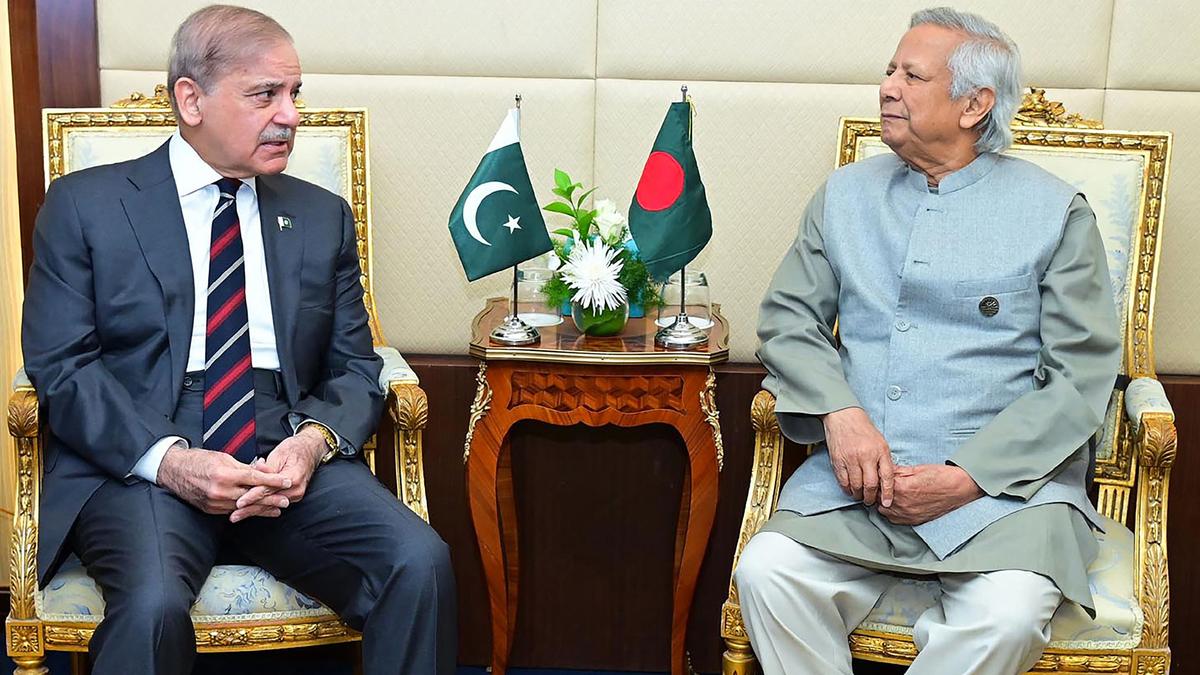
Yunus met with Pakistan’s Prime Minister Shehbaz Sharif, signaling a thaw in relations. - Diplomatic initiatives:
Bangladesh has hosted Pakistani military delegations, with key visits including the Bangladesh Army’s second-in-command meeting Pakistan’s military leaders. - Resumption of direct flights and participation in naval exercises:
Bangladesh resumed flights to Islamabad and participated in Pakistan’s Aman 2025 naval exercises, marking an unprecedented military collaboration.
Ground Realities Hindering Diplomatic Progress
- Legacy of the 1971 war:
Bangladesh’s demand for Pakistan to address the 1971 genocide remains a stumbling block, with many Bangladeshis still seeing the separation as a defining aspect of their national identity. - Public opinion challenges:
The historical grievances tied to the liberation war make diplomatic progress difficult. - Strategic and economic misalignment:
Bangladesh faces limited economic and strategic benefits from closer ties with Pakistan due to geographical and trade challenges.
Impact on India
- Shifting diplomatic dynamics:
India views these developments as part of Pakistan’s strategy to counter its influence in Bangladesh, especially after Hasina’s exit. - Indian concern about regional dynamics:
India must be wary of a potential alliance between Bangladesh, Pakistan, and China, which could disrupt India’s strategic interests, particularly in its northeast region. - India’s evolving diplomatic approach:
India’s relationship with Bangladesh must balance economic and security concerns while addressing issues such as terrorism, joint military drills, and maritime security.
India’s Strategic Response
- Economic importance of India-Bangladesh ties:
Bangladesh remains India’s largest trading partner in the region, making an overt anti-India stance difficult for Dhaka to adopt. - Vigilance on key issues:
India must remain firm on critical concerns like terrorism, weapons trade, and security in its northeast States. - Engagement on common concerns:
New Delhi should focus on border trade, smuggling, water sharing, and refugee issues, while also promoting people-to-people exchanges and cultural ties.
Conclusion
The evolving Bangladesh-Pakistan relationship presents challenges and opportunities for India. While Dhaka’s shifting foreign policy trajectory signals a move away from its previous alignment with India, economic interdependence and regional security considerations will likely prevent Bangladesh from moving overtly against India. India must continue to engage diplomatically while ensuring its strategic concerns are addressed, maintaining a balance between vigilance and cooperation.