

Can Whales Swallow Humans? Here’s What You Need to Know
Context:
A recent incident where a kayaker was momentarily swallowed by a humpback whale has raised questions about the potential for whales to swallow humans. Experts explain why this is highly unlikely, due to whale anatomy and their feeding habits.
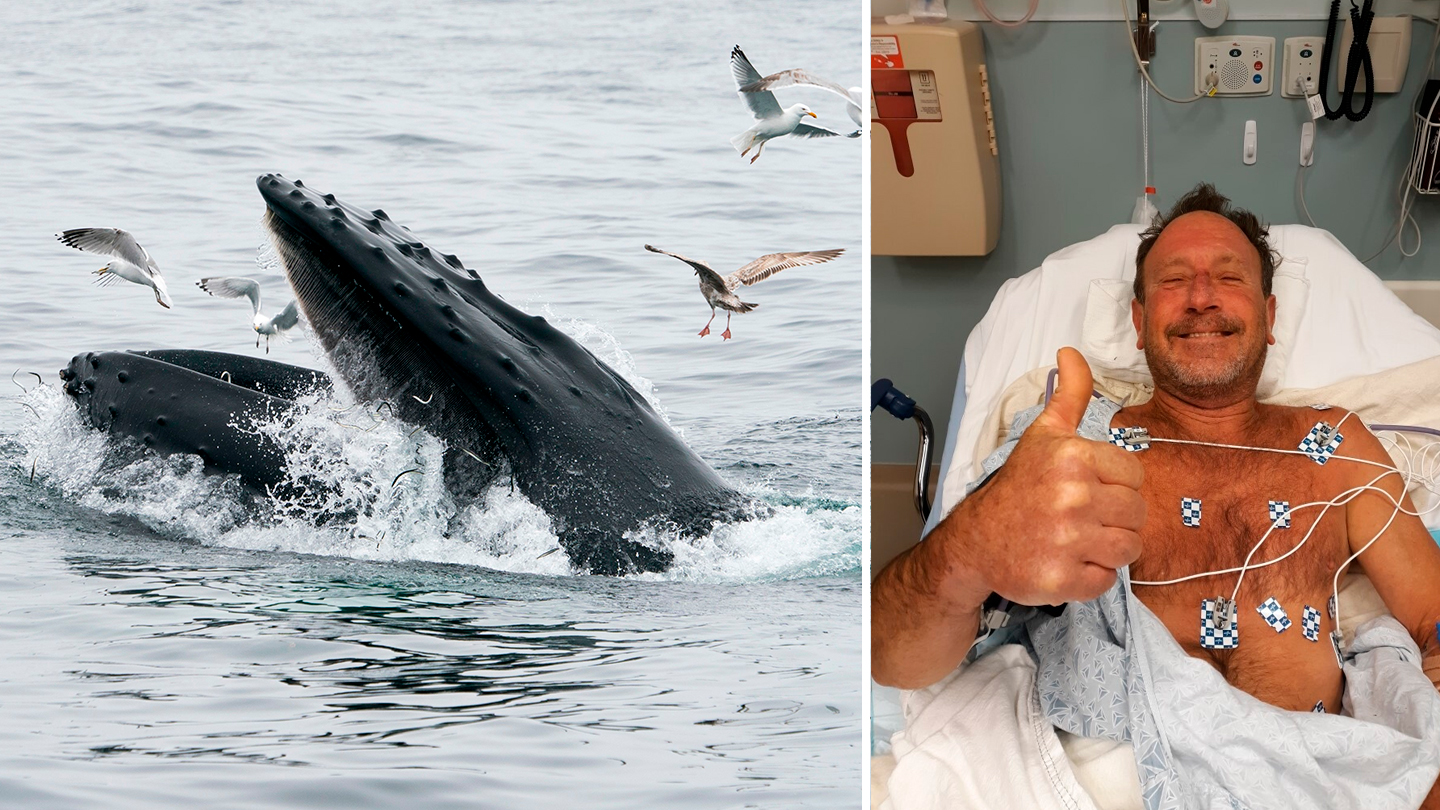
1. The Incident: A Brief Swallowing Experience
- Event: On February 8, 2025, a 23-year-old Venezuelan kayaker, Adrián Simancas, was briefly engulfed by a humpback whale in the Strait of Magellan, Chile.
- Details of the Encounter:
- Simancas was kayaking when the whale surfaced, accidentally engulfing him and his kayak for a few seconds before releasing him unharmed.
- Simancas described the experience as feeling a “dark blue or white” enveloping him, with a “slimy texture” brushing his face.
- He was pulled back to the surface by his life jacket and was unharmed.
2. Two Families of Whales
- Baleen Whales:
- Includes species like blue whales, humpback whales, and grey whales.
- They have baleen (filter-feeding structures made of keratin) instead of teeth.
- These whales filter small prey like krill, plankton, and small fish from the water.
- Toothed Whales:
- Includes sperm whales, killer whales, and dolphins.
- They have teeth and actively hunt larger prey like fish and squid.
- However, toothed whales swallow their prey whole, not chewing it.
3. Can Whales Swallow Humans?
- Anatomical Limitations:
- Despite having large mouths, whales cannot swallow humans due to their small throats.
- The humpback whale’s throat is roughly the size of a human fist.
- Toothed Whales’ Throats:
- Toothed whales have a larger oesophagus than baleen whales but still cannot swallow a human.
- Exception – Sperm Whales:
- Sperm whales have a large enough throat to potentially swallow a human.
- However, such an event is extremely rare and considered a “billion to one” chance.
4. Why Did the Whale Swallow Simancas?
- Feeding Behavior:
- Humpback whales feed by charging to the surface with their mouths open to capture prey like small fish or krill.
- The whale likely didn’t recognize Simancas or his kayak due to cloudy water conditions and the concentration of prey.
- Lack of Sound from Kayaks:
- Humpbacks primarily rely on their hearing, and small, motorless vessels like kayaks make very little sound.
- This could explain why the whale didn’t detect the kayak in its path.
5. Conclusion:
- Extremely Rare Incident: The incident with Simancas is an anomaly and not a reflection of typical whale behavior.
- Whale Anatomy: Whales, particularly humpbacks and toothed whales, cannot swallow humans due to the size of their throats.
- Safety Concerns: While whales are powerful creatures, the risk of them swallowing a human is virtually nonexistent, and incidents like Simancas’ are highly unusual.
Adultery, Maintenance, and Punishment in Armed Forces: How Adultery Remains Relevant in Law
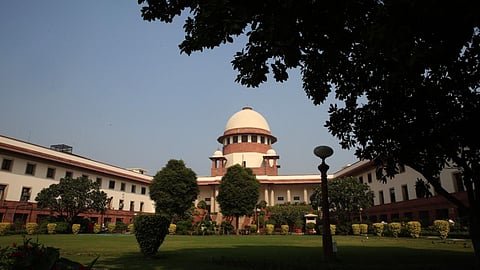
Adultery was decriminalized in India by a Supreme Court decision in 2018, but it still holds legal significance in civil matters like divorce and maintenance, and continues to be a ground for punishment in the armed forces.
Adultery in Legal Terms:
- IPC Section 497: Before its decriminalization, adultery was defined as a crime where a man had sexual intercourse with another man’s wife without his consent. It was punishable by imprisonment or a fine.
- Decriminalization (2018): The Supreme Court ruled Section 497 unconstitutional, deeming it discriminatory, as it treated women as subordinate to their husbands. Adultery was no longer a criminal offense but was retained as a moral wrongdoing in civil proceedings.
Adultery’s Civil Relevance:
- Divorce: Adultery remains a valid ground for divorce under the Hindu Marriage Act and Special Marriage Act. The courts require proof of sexual intercourse to confirm adultery as a valid ground for divorce or maintenance.
- Maintenance: Under Section 125 of the Criminal Procedure Code (CrPC), a wife is not entitled to maintenance if she is found living in adultery. Courts have clarified that proof of sexual intercourse is needed to prove adultery in these cases.
Impact on the Armed Forces:
- The armed forces argue that members are subject to distinct laws under Article 33 of the Constitution, which allow for specific provisions regarding their conduct. The Supreme Court upheld the Centre’s stance that adultery remains punishable for military personnel under the Army Act and related laws, despite the decriminalization for civilians.
Conclusion: While adultery is no longer a criminal offense for civilians, it retains its relevance in civil law concerning divorce and maintenance. Additionally, the armed forces are exempt from the decriminalization, with adultery still punishable under their specific legal frameworks.
PM Dhan-Dhaanya Krishi Yojana (PMDKY): Goals, Implementation, and Coverage
Context:
Announced by Finance Minister Nirmala Sitharaman during the Union Budget 2025 on February 1, the Prime Minister Dhan-Dhaanya Krishi Yojana (PMDKY) aims to boost agricultural productivity and sustainability. The scheme will focus on 100 districts with low agricultural performance to address challenges in farming practices, credit access, and crop intensity.

1. Overview of PMDKY
- PMDKY, inspired by the success of the Aspirational Districts Programme (ADP), aims to improve the agricultural landscape in 100 underdeveloped districts.
- The focus will be on districts with low productivity, moderate crop intensity, and below-average credit access.
- The program is designed to collaborate with state governments to bring about significant agricultural transformation.
2. Parameters for District Selection
- The scheme will target districts based on three key parameters:
- Low Productivity
- Moderate Crop Intensity
- Below-Average Credit Access
- The Ministry of Agriculture and Farmers’ Welfare will collect and analyze data to identify districts for the program.
- Cropping intensity, a measure of efficient land use, is crucial for selecting these districts.
3. Objectives of the Scheme
The PMDKY will focus on achieving five key goals:
- Enhancing Agricultural Productivity – Improve overall farm output.
- Crop Diversification and Sustainable Practices – Encourage varied crops and eco-friendly methods.
- Post-Harvest Storage – Increase storage capacities at the panchayat and block levels.
- Irrigation Improvements – Expand and enhance irrigation facilities.
- Credit Access – Ensure farmers can access both short-term and long-term credit facilities.
4. Coverage and Beneficiaries
- PMDKY will benefit approximately 1.7 crore farmers across 100 districts.
- It will assist in improving farming infrastructure, making agricultural practices more sustainable, and increasing farmers’ incomes.
5. Funding and Implementation
- The scheme does not have a separate allocation in the Budget documents.
- It will draw funds from existing agricultural and related welfare schemes.
- Formal approval from the Union Cabinet is required before full-scale implementation.
6. Alignment with Aspirational Districts Programme (ADP)
- The PMDKY will follow the structure of the ADP, which has successfully transformed 112 underdeveloped districts.
- It emphasizes Convergence, Collaboration, and Competition for driving progress across sectors.
- Performance will be measured through Key Performance Indicators (KPIs) like health, education, agriculture, infrastructure, and financial inclusion.
Conclusion
PMDKY is a targeted initiative aimed at uplifting underperforming agricultural districts, promoting sustainable farming, and improving access to resources. With the active participation of state governments and various ministries, this scheme is poised to make a significant impact on India’s agricultural sector, benefiting millions of farmers.
Modi-Trump Meeting: Implications of a Bilateral Trade Deal for India
Context: During the meeting between Prime Minister Modi and US President Trump, discussions were held on negotiating a Bilateral Trade Agreement (BTA). This agreement aims to enhance trade relations and double bilateral trade by 2030. However, challenges regarding tariffs and trade imbalances remain significant.
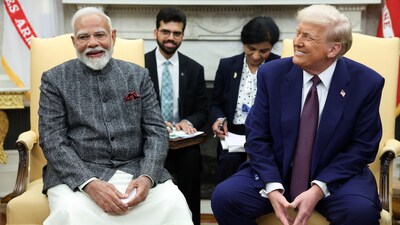
Key Aspects of the BTA and its Potential Impact on India
- Announcement of BTA Negotiations:
- The BTA aims to double bilateral trade from $200 billion to $500 billion by 2030.
- Unlike a Free Trade Agreement (FTA), BTA will focus on specific goods and market access, with reduced tariff and non-tariff barriers.
- Focus Areas of BTA:
- The agreement will target increased market access, particularly for American goods.
- Both countries have committed to lowering tariff barriers and enhancing trade cooperation.
- Trump’s Tariff Threat:
- Before meeting Modi, Trump announced reciprocal tariffs on all US trading partners, including India.
- This is in response to perceived trade imbalances and India’s tariff structures, especially on products like motorcycles and agricultural goods.
- Challenges for India in a Trade Deal:
- India may need to lower its tariffs on US goods, as the US already has some of the lowest tariffs globally.
- India’s manufacturing sector faces challenges in competing globally, particularly with low-tech and low-skill products.
- Pressure on India to Lower Tariffs:
- The US has pointed out that India’s tariffs on agricultural goods (39%) and motorcycles (100%) are significantly higher than US tariffs on Indian products (5% on agriculture, 2.4% on motorcycles).
- Trade Deficit and Energy Imports:
- India is a significant buyer of US energy, with potential to increase purchases, possibly addressing the trade deficit.
- Discussions were held around the possibility of increasing energy imports from the US to help balance the trade relationship.
- Growth in India-US Trade:
- India’s goods trade surplus with the US has doubled over the last five years, reaching $35.33 billion in 2023-24.
- Exports of electronic and engineering goods from India to the US have surged, while exports like gems and jewelry have remained stable.
- Strategic Shift in Export Basket:
- India’s export basket has evolved, with a growing share of high-tech exports like electronics and engineering goods, signaling a shift away from traditional low-tech exports.
Conclusion
The potential BTA between India and the US could lead to a stronger economic partnership, with greater market access and trade liberalization. However, the success of the agreement will depend on India’s willingness to adjust its tariff policies and navigate the complex trade dynamics shaped by ongoing tensions over tariffs.