

Overview
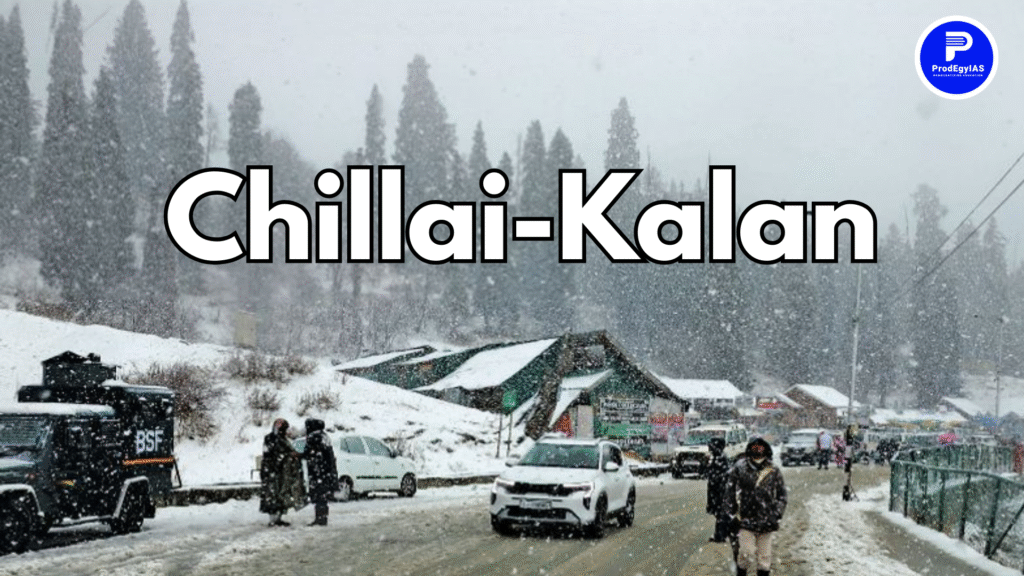
The worst winter season in the region, Chillai-Kalan, is once again approaching in Kashmir. Extreme temperatures, huge volumes of precipitation, and significant interruptions to daily life are all part of this normal 40-day cold spell. Chillai-Kalan is more than just a seasonal phenomenon; it has an impact on the climate, ecology, and culture of the Himalayan region.
What is Chillai-Kalan?
The Persian term “Chillai-Kalan” roughly means “Major Cold.” It runs from December 21 to January 30. During this time, the Kashmir Valley has its coldest weather, with frequently below-freezing temperatures. This time period is characterised by extremely cold waves, frozen rivers, and snow-covered landscapes that frequently disrupt public services, transportation, and agriculture.
Kashmir’s Winter Phases
After Chillai-Kalan, there are two incredibly mild winter seasons. For 20 days, from January 31 to February 19, the “small cold,” or Chillai-Khurd, offers mild winter conditions. Next is Chillai-Bacha, often known as “baby cold,” which lasts for 10 days from February 20 to March 2 and signifies the slow transition from winter to spring.
Cultural Significance
Chillai-Kalan has strong ties to regional customs. Known as Shab-e-Yalda or Shab-e-Chelleh, December 21st is the longest night of the year. It represents rebirth, perseverance, the triumph of light over darkness, and people’s cultural capacity to adapt to inclement weather. It is profoundly embedded in Persian culture.
Environmental and Hydrological Importance
From an ecological standpoint, Chillai-Kalan is crucial to the sustainability of water sources. Heavy precipitation feeds glaciers, snowfields, and high-altitude reservoirs at this time. The gradual melting of this snow during the summer, which preserves rivers, streams, and lakes, supports the region’s hydropower generation, drinking water demands, and agriculture.
In conclusion, in addition to being a period of extreme cold, Chillai-Kalan is an important natural cycle that has an impact on Kashmir’s ecology, culture, and economy. Realising its importance makes it easier to comprehend the complex relationships between human livelihoods, water security, and climate change in delicate alpine ecosystems.
UPSC General Studies Paper Preparation
| Topic | |
| UPSC Syllabus | UPSC Free Notes |
| UPSC Optional Subjects | Khushhali Solanki (AIR 61, UPSC CSE 2023) |
Public Administration Optional Exam Preparation
Topic | |
About the Author: Jyoti Verma