

Overview
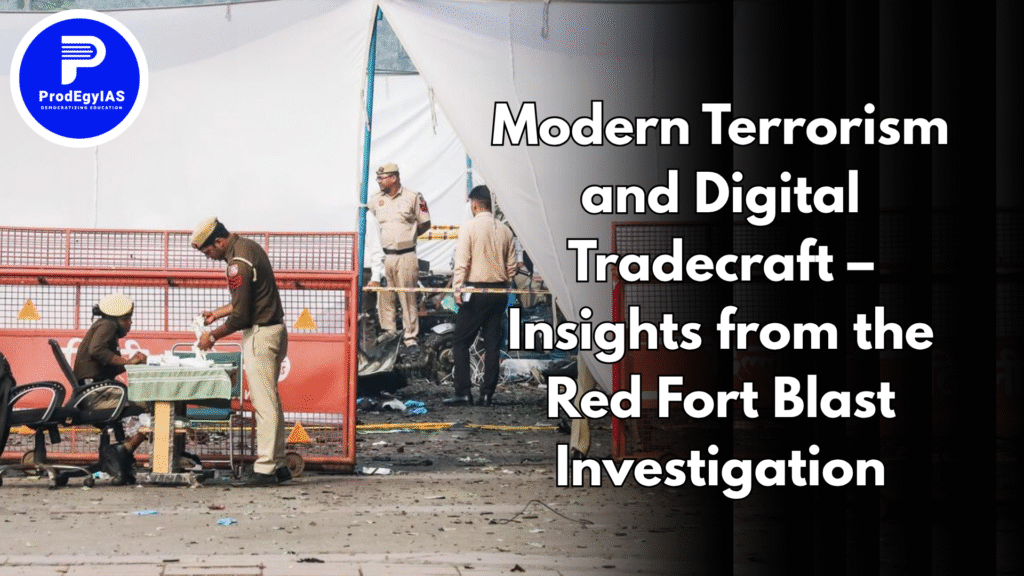
The Red Fort metro explosion on November 10, 2025, ushers in a new era of terrorism in India. What at first looked to be a typical explosion turned proved to be a digitally orchestrated attack that made use of a highly organized module, encrypted channels, and covert communication techniques. The incident demonstrates how tech-driven, low-trace digital tradecraft is replacing physical operations in terrorism.
Background and Changing Methods of Operation
The explosion and its fallout
Numerous persons were killed by the automobile explosion, which also caused widespread fear. Ammonium nitrate and other high-impact explosives were discovered by forensics, suggesting meticulous planning intended to cause the greatest amount of disturbance and terror.
The Use of Digital Tradecraft
The research revealed the usage of encrypted platforms for collaboration, apps that don’t require phone numbers, and unsent email drafts. This strategy leaves little digital traces, indicating a move away from simple phone-based communication and toward clandestine, flexible digital techniques.
From Lone Actors to Coordinated Cells: Strategic Consequences
The incident is a reflection of the emergence of organized terror groups that use mainstream institutions as operational cover and are embedded in social and educational settings.
Cross-Border Assistance and Digital Finance
Evidence points to the use of cross-border payment applications and digital wallets to transfer money, underscoring the growing trend of terror financing via digital financial networks.
Developing India’s Counterterrorism Framework
Collaboration & Digital Forensics
To combat sophisticated digital strategies, India must strengthen digital forensics, increase decryption capacity, and facilitate quicker interagency communication.
Keeping an Eye on Institutional Abuse
To stop their abuse for radicalization or planning, educational and organizational places must undergo routine examinations.
Controlling Supply Chains and Materials
To stop such assaults, supply networks, vehicle monitoring, and explosive precursors must all be closely monitored.
In conclusion
The Red Fort explosion demonstrates that technology is just as important to contemporary terrorism as explosives. India has to improve digital surveillance, close systemic weaknesses, and update its counterterrorism strategy since terror networks rely on encrypted communication, digital finance, and institutional penetration.
UPSC General Studies Paper Preparation
| Topic | |
| UPSC Syllabus | UPSC Free Notes |
| UPSC Optional Subjects | Khushhali Solanki (AIR 61, UPSC CSE 2023) |
Public Administration Optional Exam Preparation
Topic | |
About the Author: Jyoti Verma