

Answer:
Answer:
Approach to the answer:
Understanding and organizing the response: We need to go into detail on four categories—politics, religion, economy, and art—using Gupta coins.
Examples: In Indian history, the Gupta era, which spanned the fourth to sixth centuries CE, is regarded as a golden age. Understanding these patterns and how they affected society during the Gupta era can be gained through numismatics, the study of coins.
Overview:
Write about Gupta coins and provide a brief history of the Gupta empire and Give a brief overview of the Gupta coinage system after defining numismatics.
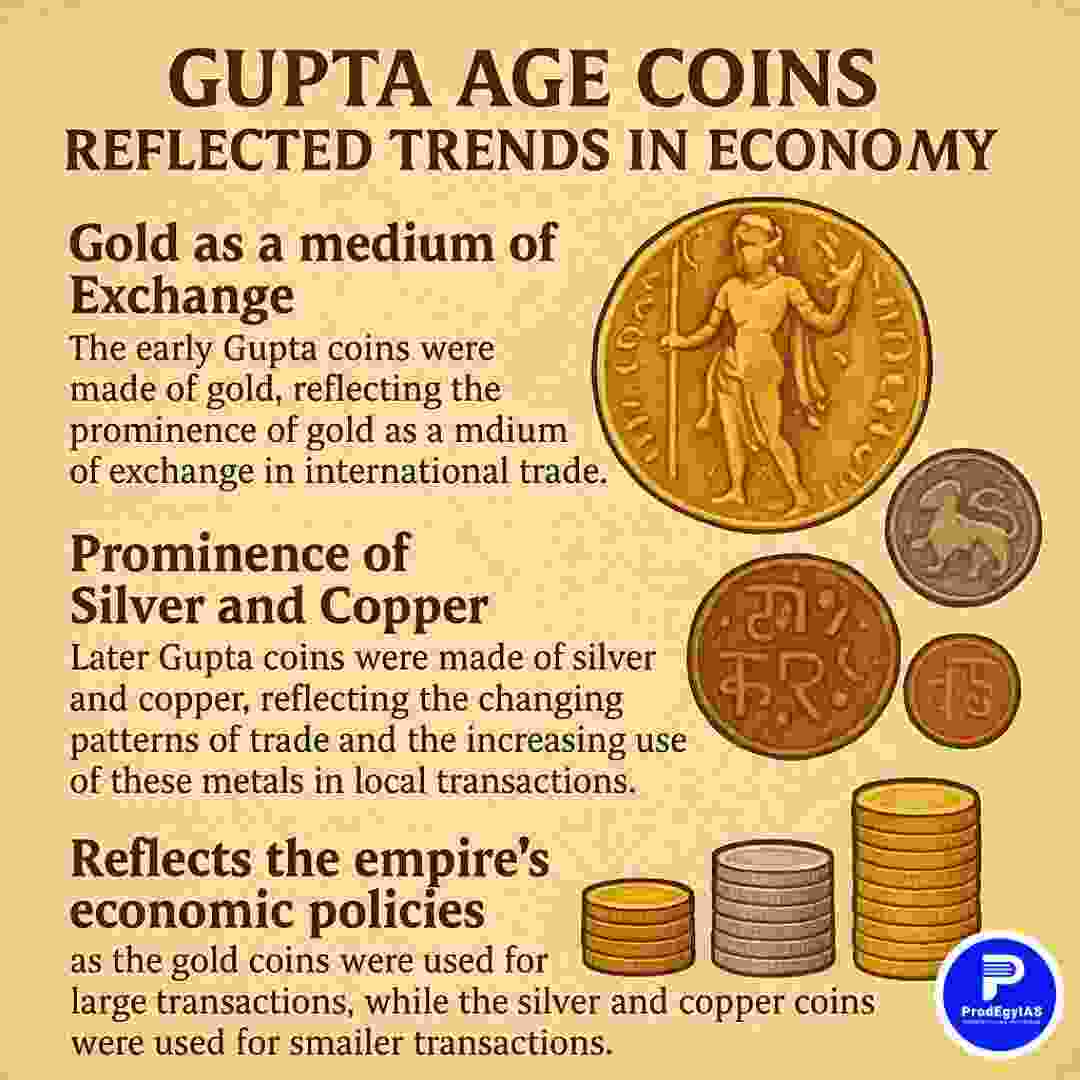
Body: Discuss the aforementioned four topics—economics, politics, religion, and the arts—using Gupta-issued coins.
In summary:
- End by complimenting the Gupta Period’s coinage.
- End by emphasizing how Gupta period coins provided information about India’s Golden Age.
Example:The creative accomplishments of the Gupta era are well-known. The highest level of Indian classical coinage was used during the Gupta Empire. During the heyday of Gupta currency, Indianite motifs, poetry, and inventiveness were creatively shown. With a distinctly Indian feel, Gupta coinage saw a significant comeback.
Practice Questions: The Gupta period is said to mark the “classical age of Indian art.” How does numismatic evidence support this claim?
UPSC General Studies Paper Preparation
| Topic | |
| UPSC Syllabus | GS Genius-50 Program |
| Public administration crash course | UPSC GS Mains 2025 Study Material |
| About the Author: Nitin Kumar Singh |