

Udanti Sitanadi Tiger Reserve
Why in News: At least 12 suspected Maoists were recently killed during a gunfight with security forces within the Udanti Sitanadi Tiger Reserve in Chhattisgarh’s Gariaband district.

About Udanti Sitanadi Tiger Reserve
Establishment
- Formed by merging the regions of Sitanadi and Udanti Wildlife Sanctuaries.
Rivers and Namesake
- Named after the rivers Udanti and Sitanadi, which flow through the respective sanctuaries.
Location
- Situated in the Gariaband district of Chhattisgarh.
- Strategically connects with the Kanker and North Kondagaon forest divisions, creating a continuous forest corridor to the Indravati Tiger Reserve in the Bastar region.
Vegetation
- Features mixed vegetation, including dry deciduous forests and tropical/sub-tropical flora.
Flora
- Rich in forest crops, predominantly Sal forests.
- The ground is covered with grass, plants, bushes, and saplings.
Fauna
- Home to diverse wildlife, including tigers, chital, wild buffaloes, barking deer, muntjac, striped hyena, blue bull, sloth bear, jungle cat, sambhar, gaur, four-horned antelopes, bison, and panthers.
- Along with Indravati Tiger Reserve, it serves as a critical refuge for the endangered wild buffalo.
Sharavathy Lion-Tailed Macaque Sanctuary
Why in News: The State Board of Wildlife has recently granted conditional approval for the Sharavathy Pumped Storage Project within the Sharavathy Lion-Tailed Macaque Sanctuary.
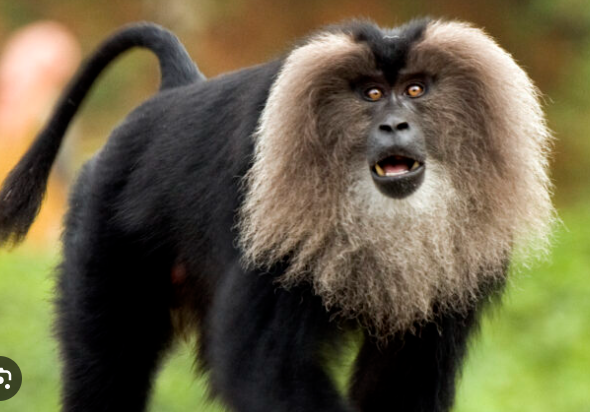
Sharavathy Lion-Tailed Macaque Sanctuary
Location
- Situated in the Sharavathi River Valley of Sagar taluk, Shivamogga District, Karnataka.
- Falls within the Western Ghats, a biodiversity hotspot.
Geographical Features
Dominated by evergreen and semi-evergreen forests in the valleys.
Grassy patches are found on hilltops.
Formed by merging:
- Sharavathi Valley Wildlife Sanctuary
- Aghanashini Lion-Tailed Macaque Conservation Reserve
- Adjoining reserve forest blocks
- Shares its southwestern boundary with the Mookambika Wildlife Sanctuary.
Flora
- Rich in species like Dhoopa, Gulmavu, Surahonne, Mavu, Nandi, etc.
Fauna
A crucial habitat for the endangered Lion-Tailed Macaque (Macaca silenus), endemic to the Western Ghats.
Other notable mammals include:
- Tiger, leopard, wild dog, jackal, sloth bear
- Spotted deer, sambar, barking deer, mouse deer, wild pig
- Common langur, bonnet macaque, Malabar giant squirrel, etc.
Annual Status of Education Report (ASER) 2024
Why in News: The Annual Status of Education Report (ASER) 2024 indicates that student enrolment in both government and private schools has reverted to pre-pandemic levels.

Overview of ASER
Aspect | Details |
Meaning | ASER means ‘impact’ in Hindustani. |
Type | A nationwide, citizen-led household survey. |
Purpose | Assesses children’s schooling and learning in rural India. |
Coverage | Includes all children, even those not in school or absent. |
Age Group | 3-16 years (schooling status), 5-16 years (reading & arithmetic). |
Conducted By | ASER Centre, facilitated by Pratham network. |
Evolution of ASER Surveys
Year | Focus Area |
2005-2014 | Conducted annually, assessed foundational learning. |
2016 Onwards | Shifted to an alternate-year model. |
ASER 2017 | Focused on youth (14-18 years) – activities, abilities, aspirations. |
ASER 2019 | Assessed early childhood skills (4-8 years) – cognitive, language, numeracy. |
ASER 2023 | Returned to 14-18 years with an added focus on digital literacy. |
ASER 2024 | Restored the nationwide ‘basic’ survey, covering almost all rural districts. |
Key Focus Areas (ASER 2024)
Focus | Details |
Enrollment Status | Collected for children aged 3-16 years. |
Learning Assessment | Children aged 5-16 years tested for basic reading and arithmetic. |
Digital Literacy | Children aged 14-16 years assessed on digital access, usage, and smartphone-based tasks. |
Key Findings
1. Learning Outcomes
Class | Key Findings |
Class 3 (Govt. Schools) | 23.4% can read a Class 2 text (up from 16.3% in 2022). |
Class 3 | Two-thirds struggle with subtraction. |
Class 5 | Only 30.7% can solve division problems. |
Class 8 | 45.8% have mastered basic arithmetic (slight improvement). |
2. Regional Variations
State | Improvement in Reading Levels |
Uttar Pradesh | Highest increase (+15 percentage points). |
Bihar, Haryana, Odisha | Significant gains in reading skills. |
3. Government vs Private Schools
School Type | Learning Recovery |
Government Schools | Stronger learning recovery post-pandemic. |
Private Schools | Still below pre-pandemic levels. |
Overall Concern | 30% of children struggle to read a Class 2 text. |
4. Enrollment Trends
Metric | Value (2024) | Comparison (2022) |
School Enrollment (6-14 years) | 98.1% | Near pre-pandemic levels. |
Government School Enrollment | 66.8% | Dropped from 72.9%. |
Underage Children in Class 1 | 16.7% | Lowest ever recorded. |
5. Digital Literacy
Metric | Value (2024) |
Smartphone Access in Rural Areas | 84% of households own smartphones. |
Teenagers Using Smartphones for Education | 57%. |
Teenagers Using Smartphones for Social Media | 76%. |
Gender Gap | More boys report using and owning smartphones than girls. |
6. Factors Driving Learning Trends
Factor | Impact |
NEP 2020 & Nipun Bharat Mission | Driving improvements in foundational literacy. |
Digital Tools (Smartphones, Apps, Online Content) | Helped sustain learning post-pandemic. |
Union Budget
Why in News: The Budget, presented in Parliament by the Finance Minister, outlines the Government’s plans for expenditure and taxation, shaping the economy and impacting citizens’ lives.

Overview
- The Union Budget, also known as the Annual Financial Statement under Article 112 of the Indian Constitution, outlines the government’s revenue and expenditure plans for the financial year.
- It must be approved by Parliament before becoming effective on April 1, marking the beginning of the financial year.
- The Railway Budget was merged with the Union Budget in 2017 based on the Bibek Debroy Committee’s recommendations.
- In 2019, Nirmala Sitharaman became the second woman to present the Budget after Indira Gandhi.
Components of the Budget
- Expenditure
- Divided into capital expenditure and revenue expenditure.
- Capital expenditure: Used to create assets like roads, schools, and hospitals or reduce liabilities.
- Revenue expenditure: Includes salaries, subsidies, and interest payments that do not create assets.
- Receipts
- Revenue receipts: Include tax and non-tax income that does not create liabilities.
- Non-debt capital receipts: Include disinvestment proceeds and loan recoveries, which do not increase liabilities.
- Debt-creating capital receipts: Increase liabilities and require future repayments.
- Fiscal Deficit
- The gap between total expenditure and the sum of revenue receipts & non-debt capital receipts.
- A high fiscal deficit means more borrowing, impacting inflation and interest rates.
Implications of the Budget on the Economy
Factor | Impact |
Economic Growth | Government spending on infrastructure, welfare, and reforms boosts private investment and growth. |
Inflation Control | Adjustments in subsidies, taxes, and debt management influence inflation. |
Fiscal Deficit & Debt | High deficit increases borrowing; fiscal discipline ensures economic stability. |
Taxation & Reforms | Tax policy changes affect businesses, consumers, and government revenue. |
Employment | Budget allocations for infrastructure & skill development create jobs. |
Foreign Investment | Investor-friendly policies enhance Foreign Direct Investment (FDI). |
Social Welfare | Increased spending on healthcare, education, and subsidies improves living standards. |
Stock Market | Policy changes influence market sentiment and investor confidence. |
Sustainability | Investments in green infrastructure & renewable energy support environmental goals. |
Fiscal Rules
- Fiscal rules define policy targets for financial stability.
- Governed by the N.K. Singh Committee Report, which sets three key targets:
- Debt-to-GDP ratio (Stock Target)
- Fiscal Deficit-to-GDP ratio (Flow Target)
- Revenue Deficit-to-GDP ratio (Composition Target)